Stroke Recovery Timeline: What Families Can Expect
Families often ask the same question soon after a stroke: how long will recovery take? The honest answer is that there is no single stroke recovery timeline. Some people improve within days or weeks, while others work on recovery for months or years. This guide explains what the NHS and the US National Institute of Neurological Disorders and Stroke (NINDS) say about how recovery usually unfolds, so you know what to ask the care team. It covers recovery after a stroke has been treated, not emergency care.
Why there is no fixed stroke recovery timeline
The NHS says some people recover within days or weeks with little lasting impact, while others need months or years and may have to make lasting changes, such as adapting the home or stopping work.
Recovery depends on how much the stroke affected the person physically and mentally, and on their rehabilitation plan. NINDS adds that whether someone has a lasting disability, and how much, depends on the size of the brain injury and which brain areas are damaged. So comparing your family member with someone else's recovery can mislead. The more useful question is whether they are making progress against their own plan.
The stages, at a glance
| Stage | Typical timing in the sources | Main focus |
|---|---|---|
| Hospital rehabilitation | Often starts within 48 hours of the stroke (NINDS) | Exercises to overcome paralysis or weakness, first steps toward daily living skills |
| Going home | After discharge, with a home recovery plan (NHS) | Physiotherapy for movement, plus other therapies as needed |
| Progress review | About 6 months (NHS) | Checking progress and adjusting the plan |
| Longer term | Months or years (NHS, NINDS) | Continued gains, adapting to any lasting effects |
These are the timings the sources describe. They are not guarantees for any one person.
Stage 1: Rehabilitation starts in hospital
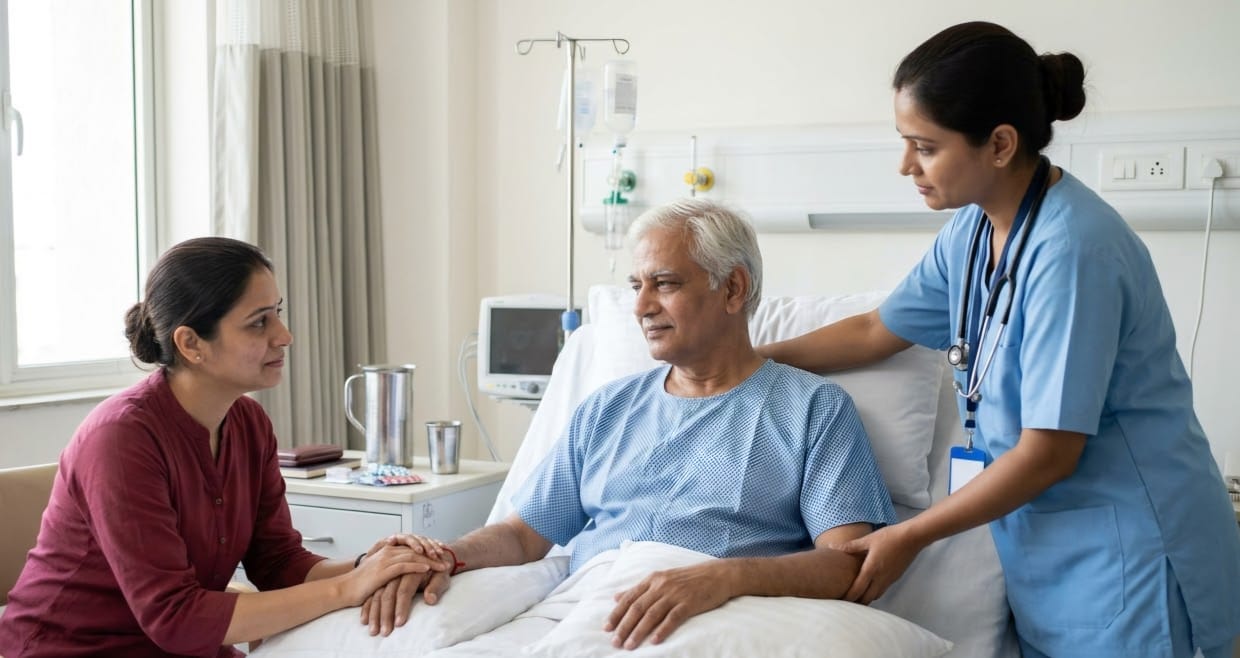
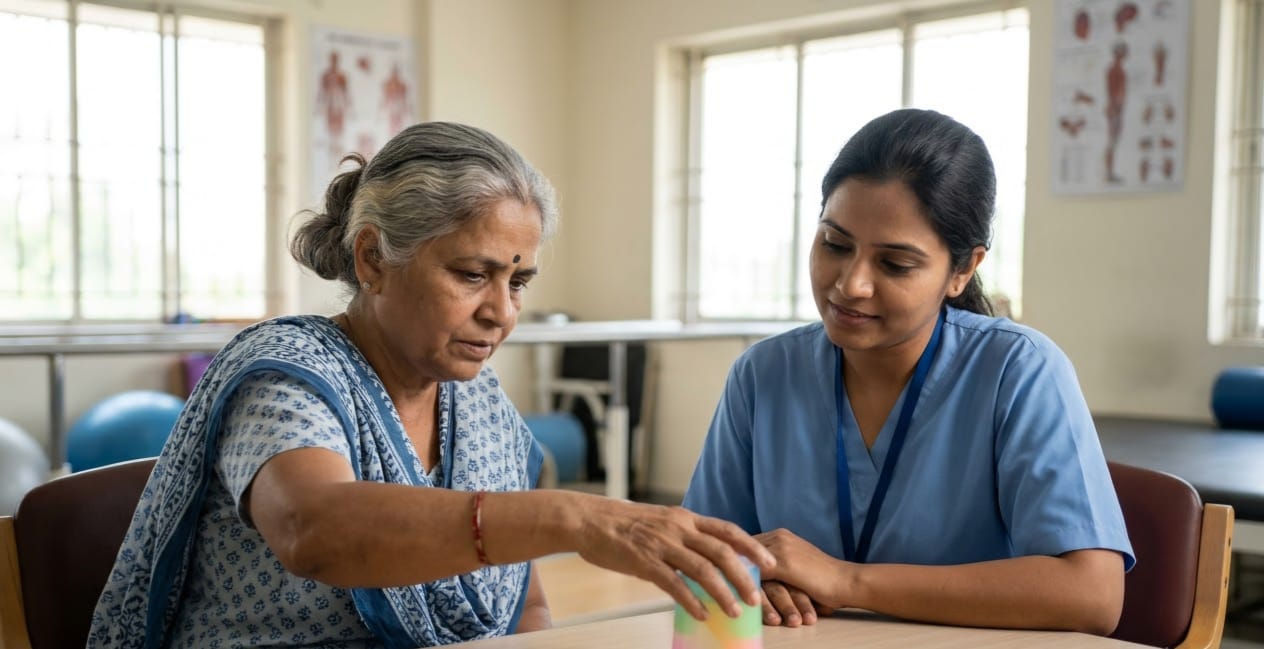
NINDS says rehabilitation usually starts in the hospital, often within 48 hours of a stroke, and often begins with exercises to help overcome paralysis or weakness. Physical therapists work alongside occupational therapists and speech-language pathologists to help people relearn skills lost to brain damage, using repetitive, carefully directed practice. Where skills cannot fully return, therapists teach compensation strategies, such as using one hand or assistive devices.
Relearning daily living skills is described as the first step back toward independence.
Stage 2: Going home with a recovery plan
The NHS says the healthcare team continues support after discharge by creating a recovery plan for home. Physiotherapy is part of that plan for movement problems, including exercises for issues such as numbness down one side of the body. The plan can also include:
- Cognitive behavioural therapy for anxiety, depression and tiredness
- Cognitive rehabilitation for memory, concentration, thinking and mood
- Exercises for speech, swallowing and vision
- Help with bowel or bladder problems
Rehabilitation can be in person or online, and the NHS says teams should provide any home equipment and the training or support needed to use it. Rehabilitation exercises are often difficult, but they help progress.
Stage 3: Months and years of continued recovery
NINDS explains that the brain can rewire its circuits, so function may keep improving over months or years. Its page does not set a maximum duration. It says rehabilitation can make a major difference to long-term outcomes and that most people with a stroke regain some function.
The NHS advises a progress review after about 6 months. If one is not offered, it suggests asking the team for it. Use that appointment to discuss what has improved, what has not, and whether the plan should change.
How families can support the recovery
The sources do not give a checklist for families, so treat these as general suggestions and adapt them with the care team:
- Go to therapy sessions when you can, so you learn the exercises and how to cue them at home.
- Keep a simple diary of what the person can do each week. It makes progress easier to see and gives the therapist useful detail.
- Ask about the 6 month review early, so it is booked rather than missed.
- Look after the carer too. Recovery can last a long time.
Home physiotherapy during stroke recovery
Once the person is home, regular physiotherapy helps keep the exercise plan going between hospital or clinic visits. Senocare offers home physiotherapy for stroke and paralysis, and also provides paralysis treatment at home and physiotherapy exercises for paralysis. Any programme should follow the advice of the person's treating doctor and rehabilitation team.
This article is general education and not a substitute for medical advice.
Book Home Physiotherapy →Frequently Asked Questions
Yes. NINDS says function may improve over months or years because the brain can rewire its circuits. The NHS suggests a progress review at about 6 months, which is a checkpoint rather than an end point.
NINDS lists home-based programmes among the care settings, and the NHS describes a recovery plan for home that includes physiotherapy. Online rehabilitation is also mentioned by the NHS.
No one can promise that. NINDS says most people with a stroke regain some function, but lasting disability depends on the size of the brain injury and which areas are affected.