Physiotherapy After Fracture: Recovery and Rehab Basics
A broken bone heals in weeks to months, but getting full movement and strength back takes more than a cast and time. This guide explains what to expect from physiotherapy after fracture: how long healing usually takes, why the area feels stiff and weak afterwards, and how rehabilitation helps. It draws on the American Academy of Orthopaedic Surgeons (AAOS). Your orthopaedic surgeon decides your plan, including when you can move and how much weight you can bear.
How long does a fracture take to heal?
AAOS says healing time depends on how extensive the injury is and where it is, your age, other medical conditions and how well you follow your doctor's advice. Typical ranges it gives:
| Fracture | Typical healing time (AAOS) |
|---|---|
| Finger | Often 3 to 4 weeks |
| Many other fractures | 6 to 8 weeks |
| Larger or more complex injuries | Several months, 3 to 6 months on average, or longer |
Pain usually fades well before the bone is strong enough for normal activity. For that reason you may need to limit movement even after the cast or brace comes off.
Why the area feels stiff and weak afterwards
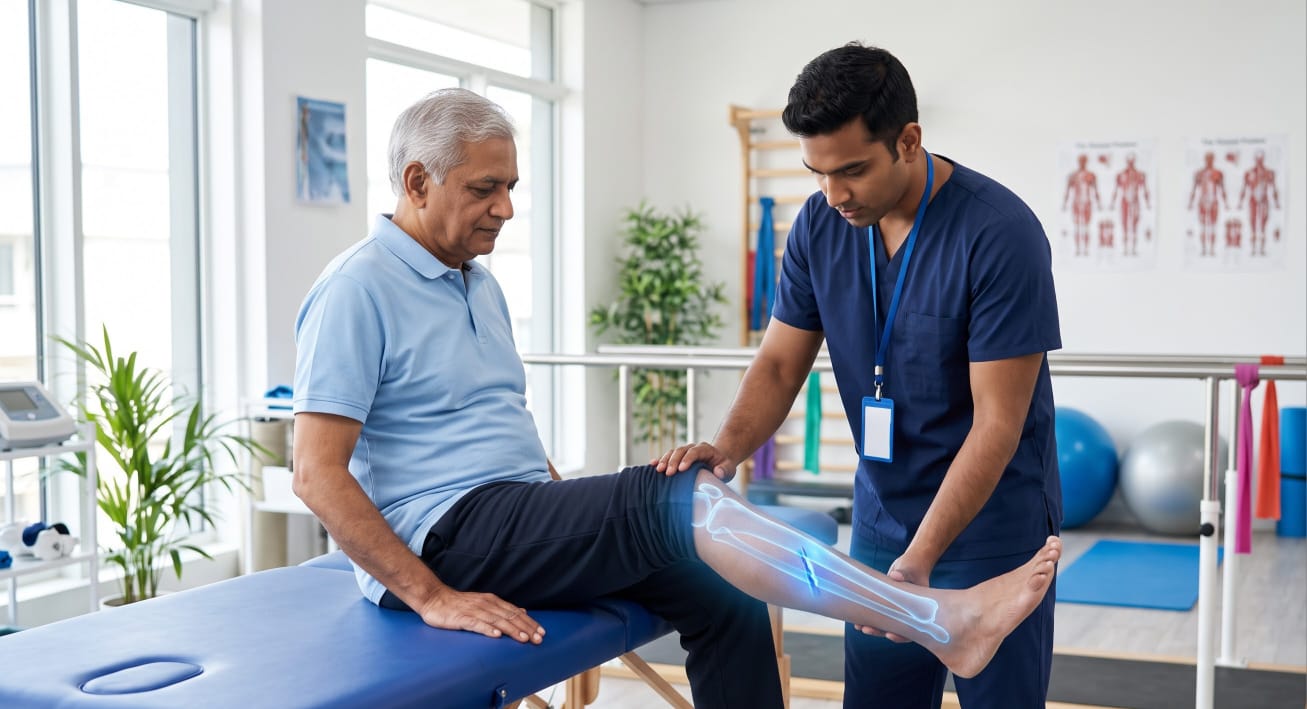
AAOS notes that stiffness and weakness are common during healing because the area is immobilised. You can expect some loss of muscle strength and range of motion in the injured area. Specific exercises help restore muscle strength, joint motion and flexibility.
What physiotherapy after fracture involves
AAOS does not give a detailed rehabilitation plan, and it says your doctor or therapist should guide your programme. In general terms, a physiotherapist will check how far the joint moves and how strong the muscles are, then set exercises that progress as the bone heals. These steps are a general description rather than something from the source.
Senocare's service page describes range of motion exercises as a common treatment for orthopaedic injuries, noting that prolonged rest can immobilise joints and that the exercises help you regain muscle strength and improve motion. You can read more on the physiotherapy at home page.
Treatments your surgeon may use first
Before rehabilitation, the bone has to be held in position. AAOS lists:
- Cast or brace: the most common treatment. Some allow controlled movement of nearby joints.
- Traction: a gentle, steady pull to align the bone, usually a temporary step before surgery.
- External fixation: pins or screws above and below the fracture, connected to an outside frame, which may be temporary or final.
- Surgery: the bone is realigned and held with screws, plates or rods.
Which of these you had affects when rehabilitation begins, so ask your surgeon for the timing.
Practical tips for the recovery period
The source does not give a checklist, so these are general suggestions to discuss with your team:
- Ask the surgeon in writing when movement can begin and what limits apply to weight bearing.
- Keep to the exercises you are given, even when pain has settled. Pain fading does not mean the bone is ready for full activity.
- Note any change in stiffness or swelling to mention at follow-up.
When to contact your doctor
AAOS does not list specific warning signs, but it says your doctor will guide your recovery and discuss your situation, so contact them with any questions or concerns about healing. If you are unsure whether something is normal, ask rather than wait.
Planning rehab at home
If getting to a clinic is difficult, especially for an older family member, a physiotherapist can see you at home. Senocare's home physiotherapy service covers Delhi, Gurgaon, Noida and Faridabad. This article is general education and not a substitute for advice from your surgeon or physiotherapist.
Book a Physiotherapist at Home →Frequently Asked Questions
AAOS says stiffness and weakness are common because the area has been immobilised, and some loss of strength and range of motion is expected. Specific exercises help restore them.
Ask your surgeon. AAOS says you may need to limit movement even after the cast or brace is removed, because the bone needs time to become solid.
AAOS says exercises help restore strength, motion and flexibility, but it leaves the programme to your doctor or therapist. Ask your surgeon whether you need formal physiotherapy.