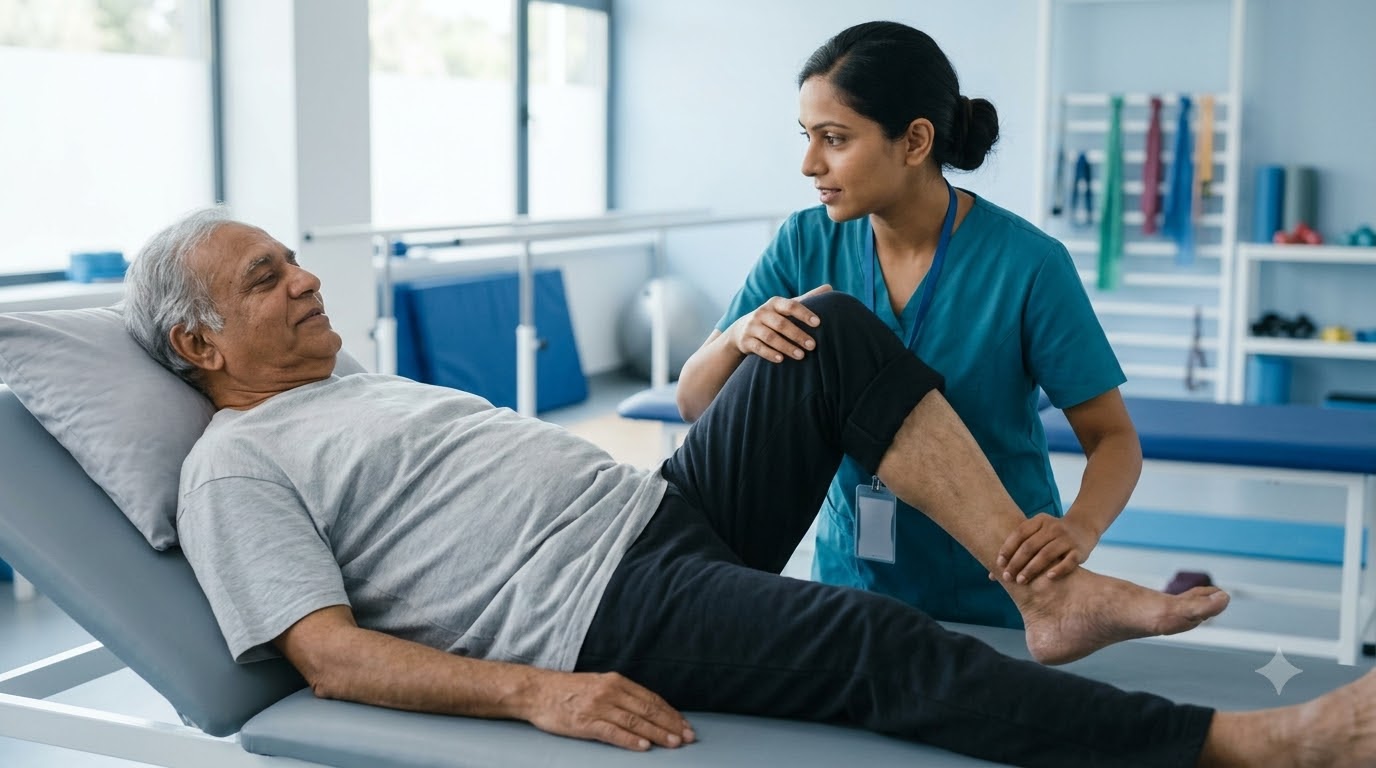
Physiotherapy After Knee Replacement: What Recovery Looks Like
A knee replacement ends in the operating theatre, but the recovery that decides how well the new joint works happens afterwards, and most of it is exercise. This guide explains what physiotherapy after knee replacement usually involves, how the first weeks tend to unfold and what to avoid. It draws on guidance from the NHS and the American Academy of Orthopaedic Surgeons (AAOS). Your surgeon's instructions always come first, because the plan can differ for each person.
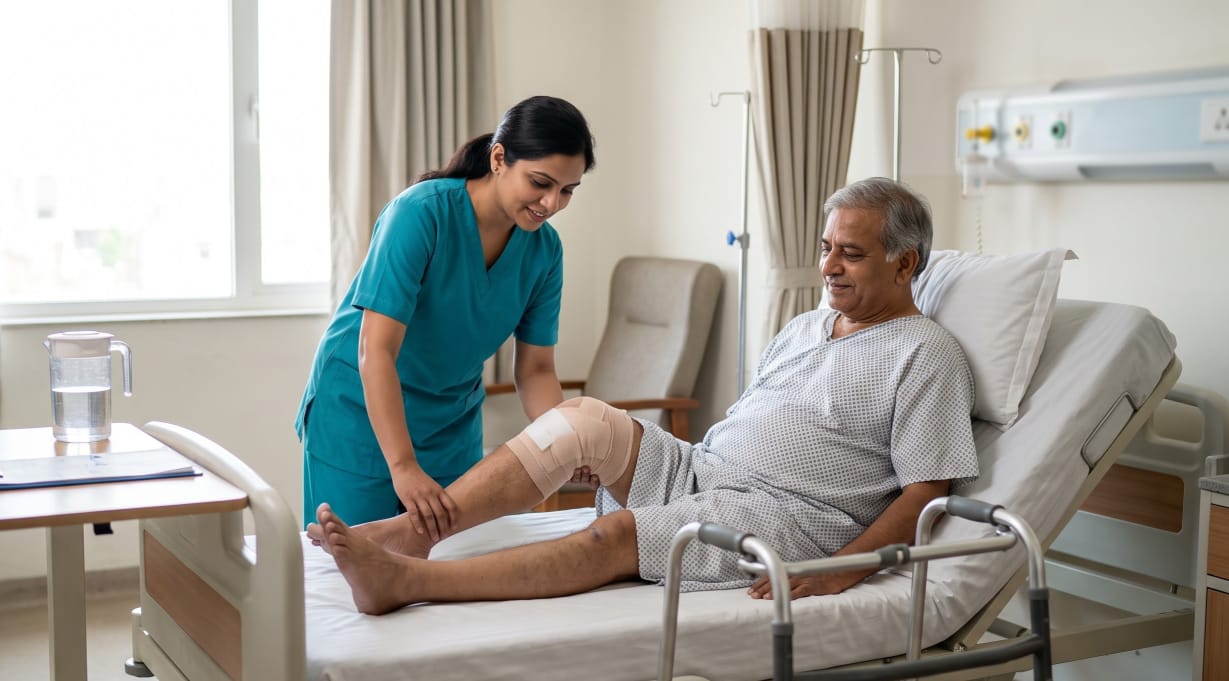
How long does recovery after knee replacement take?
The NHS says full recovery takes “several months or longer”, and that partial knee replacements usually recover faster than total ones. Many everyday milestones come much sooner.
| Milestone | What the NHS says |
|---|---|
| Going home | Usually 1 to 4 days after surgery, if there are no complications and you can get around safely with crutches |
| Stitches or clips | Removed by a nurse after about 10 days |
| Walking aids | Crutches or sticks first, then one crutch, then a walking stick. Try walking unaided after about 6 weeks if you feel ready |
| Compression stockings | Worn at all times except for washing, usually for at least 6 weeks |
| Driving | At least 6 weeks after a total replacement or 3 weeks after a partial one. Check with your doctor first |
| Follow-up appointment | About 6 weeks after surgery |
| Return to work | Usually about 6 to 12 weeks, depending on your job |
| Heavy household tasks | Avoid for the first 3 months |
These are typical timeframes, not promises. Some people move faster and some need longer.
Why physiotherapy matters after knee replacement
The NHS notes that nurses and physiotherapists help you start walking soon after surgery. It also says the exercises your physiotherapist recommends help recovery and prevent complications, and that starting them early supports long-term knee strength and movement.
In practice, a physiotherapist does three things: shows you which exercises to do and how, adjusts them as the knee improves, and tells you when to hold back. That last part matters, because both too little and too much activity can slow recovery.
Early exercises: from the first days
AAOS advises starting early exercises as soon as you can, including in the recovery room. The guide lists these for the early stage, done in bed or sitting:
- Ankle pumps: move the foot up and down. In the recovery room, AAOS suggests 2 to 3 minutes, 2 to 3 times an hour, continuing until swelling settles.
- Quad sets: tighten the thigh muscle on the operated leg.
- Straight leg raises: lift the straightened leg a short way off the bed.
- Knee straightening: rest the heel on a rolled towel and let the knee straighten.
- Supported knee bends: bend the knee while the bed or a chair supports the movement.
Early walking with a walker or crutches is part of the plan too. AAOS suggests about 30 minutes, 2 to 3 times a day, in early recovery. Walk smoothly and avoid limping or leaning away from the operated knee. Check with your therapist or surgeon before you try any of the exercises, and follow their advice on how much weight to put on the leg.
What changes between weeks 2 and 6
As strength returns, the programme becomes more demanding. According to AAOS:
- Walking aids: you can move to a single cane once you can walk and stand for more than 10 minutes without leaning on the walker, often around 2 to 3 weeks.
- Stairs: use a handrail, lead with the good knee going up and the operated knee going down, and have someone help until you regain most of your strength. Avoid steps higher than the standard 7 inches.
- Advanced exercises: once you can walk short distances, standing knee bends, assisted knee bends, ankle-weight exercises and a stationary bike are added.
- Ankle weights: usually from about 4 to 6 weeks, using 1 to 2 pounds.
- Stationary bike: start by pedalling backward, add tension at about 4 to 6 weeks, and build up to 20 to 30 minutes, 3 to 4 times a week.
How often should you exercise?
AAOS recommends 20 to 30 minutes of exercise a day, or 2 to 3 times a day if your team advises it. The NHS adds that keeping your leg raised as much as possible helps reduce swelling.
A simple routine many people find easier to stick to: exercise at set times, such as after breakfast and after the evening meal, and note what you did in a small diary. A diary also gives your physiotherapist a clearer picture at the next visit. This is a general suggestion rather than a medical rule.
Managing pain and swelling after exercise
Some soreness after exercise is expected, and your surgical team will tell you what to take for pain. For pain or swelling after exercise, AAOS suggests elevating the leg and icing the knee for 20 minutes on and 20 minutes off, repeated for about 2 hours.
What to avoid in the early weeks
The NHS recovery page lists several things to avoid:
- Kneeling on the new knee until your doctor says it is safe
- Crossing your legs for the first 6 weeks
- Standing for long periods, which can cause ankle swelling
- Heavy household tasks such as vacuuming or carrying shopping for the first 3 months
Physiotherapy at home after knee replacement
Many families prefer physiotherapy at home in the early weeks, because travelling to a clinic with a stiff, swollen knee can be tiring. Senocare's service page lists recovery from surgery, including hip replacement and other orthopaedic surgery, among the conditions its home physiotherapists work with.
If you arrange home visits, a few general suggestions can help: keep walkways clear of rugs and cables, have a firm chair with arms for sitting and standing, and keep the exercise space close to where you rest. These are practical suggestions, not clinical rules, so ask your physiotherapist what suits your home.
When to contact your care team
The NHS page does not list specific warning signs. It refers to signs of complications and points readers to its separate complications guidance, so use the instructions on your discharge papers and call your surgical team if you are unsure whether something is normal. AAOS also advises telling your surgeon or physiotherapist if your progress stalls or problems persist.
Planning your recovery
Recovery after knee replacement is a steady build, not a race. If you are in Delhi NCR and would like a physiotherapist to guide the exercises at home, you can read about home physiotherapy sessions and pricing or check the service pages for Gurgaon, Delhi, Noida and Faridabad. This article is general education and not a substitute for advice from your surgeon or physiotherapist.
Book a Physiotherapist →Frequently Asked Questions
AAOS advises checking with your therapist or surgeon before you try any of the exercises in its guide. A physiotherapist can show you the right technique and weight bearing for your stage of recovery, so the first sessions are best supervised.
The NHS says partial knee replacements usually recover faster than total ones, but its page does not say exercises can be skipped. Ask your surgeon what programme they want you to follow.
The NHS describes full recovery as taking several months or longer, so a slow week is not unusual. AAOS says to tell your surgeon or physiotherapist if progress stalls or problems persist, so they can adjust the plan.