Physiotherapy Equipment for Home Use: A Safe Buying Guide
It is easy to spend money on gadgets that promise relief. Before you buy physiotherapy equipment for home use, it helps to know what each item does, who should avoid it, and why your therapist should have a say. This guide covers two common items, TENS machines and resistance bands, using NHS guidance.
Start with a question, not a shopping cart

The right equipment depends on your problem and your plan. A device that suits one person's back pain may be unsafe for another. The NHS advises seeing a GP or other healthcare professional before using a TENS machine, especially if you are not sure what is causing the pain. A sensible rule is to buy only what your therapist has recommended for your exercises.
TENS machines
What it is
The NHS describes a TENS machine as a device that sends a weak electrical current through sticky pads to your nerves. It is thought to prompt the body to release endorphins and to block pain signals from reaching the brain. The NHS also says it does not work for everyone.
Who should not use one
The NHS says TENS should not be used by people with epilepsy or a pacemaker. It also says pregnant people should use it only if a doctor or midwife advises it.
Safety rules from the NHS
- Do not use it on irritated, broken, infected or numb skin.
- Do not use it on the neck, mouth or eyes, or on the chest and back at the same time.
- Do not use it while sleeping, in the bath or shower, or while driving or using tools or machinery.
- Stop and remove the pads if skin becomes itchy, irritated or red.
- Read the leaflet that comes with your machine for the full list of restrictions.
Using it
The NHS describes the steps as: switch the machine off, set the controls, plug in the wires, attach the pads to clean skin near the painful area with a gap between them, switch on, and slowly turn the dial until you feel a tingling sensation that is not painful. A therapist can advise on pad placement.
Buying
The NHS says you can buy one online, from pharmacies or from electrical shops, or hire one, and to look for a European CE mark or UKCA mark. Those marks are UK and European, so for an Indian purchase it is sensible to ask your therapist or pharmacist which quality information to check.
To understand how therapist-delivered treatment works, see electrotherapy in physiotherapy.
Resistance bands
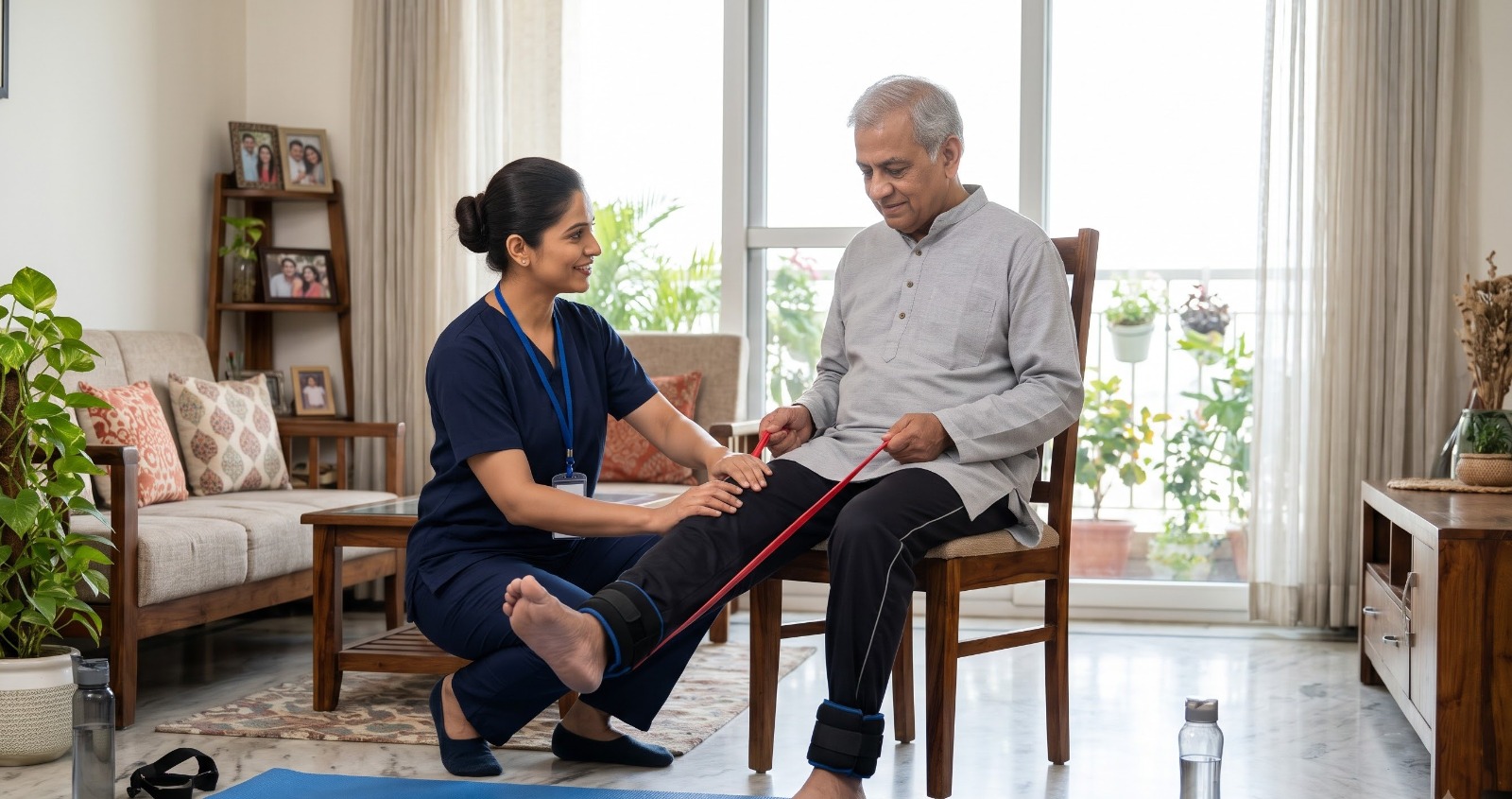
A leaflet from West Hertfordshire Teaching Hospitals gives clear safety advice for exercise with bands. Below is a summary.
| Check | Advice |
|---|---|
| Before every use | Examine the band for small tears or punctures. If you find flaws, discard and replace it. |
| Which exercises | Do only the exercises your physiotherapist has taught you. |
| Anchoring | Fix the band to a sturdy object and get a firm grip. For loops, tie a double knot and check it does not slip. |
| Latex | Some bands contain natural latex. If you are allergic, do not use it and tell your physiotherapist. |
| Eyes and hands | Do not exercise with the band near or level with your eyes. Remove rings and mind long fingernails. |
| Stop if | You feel sharp pain, shortness of breath, dizziness or light-headedness. |
| Soreness | Some soreness is normal, especially in the first few days. If it persists, stop and consult your physiotherapist. |
| Children and pets | Keep bands away from small children and pets. A child needs adult supervision. |
| Storage | Keep it cool, away from direct sunlight, radiators and freezers. |
Before you buy anything
- Ask your therapist which items you actually need.
- Ask them to show you how to use each one.
- Check for allergies, such as latex.
- Keep manuals and read them.
- Stop and seek advice if anything feels wrong.
If you would rather have a therapist deliver treatment at home, see how physiotherapy at home works. Sessions start from ₹900, with the final price depending on the condition, duration and therapist experience.
What this article does not cover
We did not open a source for exercise balls or other gym-style items, so we have left them out rather than guess. The NHS and West Hertfordshire pages are UK sources.
Book a Physiotherapist at Home →FAQs
The NHS sets clear restrictions, including epilepsy, pacemakers and pregnancy, and advises seeing a GP or other healthcare professional first, especially if you are unsure what is causing the pain.
No. The NHS says it does not work for everyone.
No. The NHS says not to use it while sleeping, in the bath or shower, or while driving.
Check for small tears or punctures before every use. If you find any, replace it.