What are Physiotherapy Stretching Exercises?
Published on:
Physiotherapy stretching exercises play a pivotal role in enhancing flexibility, preventing injuries, enhancing smoother mobility and overall well-being. Understanding the different types of stretching, their effects, advantages, and disadvantages is crucial for incorporating them effectively into your fitness routine.
What is Stretching?
Stretching is the deliberate elongation of muscles performed by the person themselves or by assisting physiotherapist to improve flexibility and range of motion. Physiotherapy stretching exercises are designed to target specific muscle groups along with passive structures such as fascia and joint capsules, promoting better functionality and reducing the risk of injuries.(1)
Effects of Physiotherapy Stretching Exercises
- Increased general and local flexibility
- Improved joint range of motion
- Enhanced blood circulation especially in the stretched tissue or muscle
- Reduced muscle tension and stiffness
Advantages of Stretching Exercises
- Prevention of injuries in daily life as well as sports
- Improved posture
- Enhanced athletic performance due to improved muscle contractility
- Reduced muscle stiffness post exercise
- Stress relief with generalised relaxation
Disadvantages of Physiotherapy Stretching Exercises
- Overstretching may cause injuries and tissue trauma(2)
- Ineffective without proper form and stabilisation of the adjacent body parts
- Not a substitute for warm-up exercises
Types of Stretching Exercises in Physiotherapy
Static Stretching(3)
a. Active Stretching
Active stretching is performed by the individuals themselves without any assistance. It involves holding a stretch position using the strength of the adjoining muscle groups. This type is particularly beneficial for improving flexibility and reducing muscle imbalances.
b. Passive Stretching
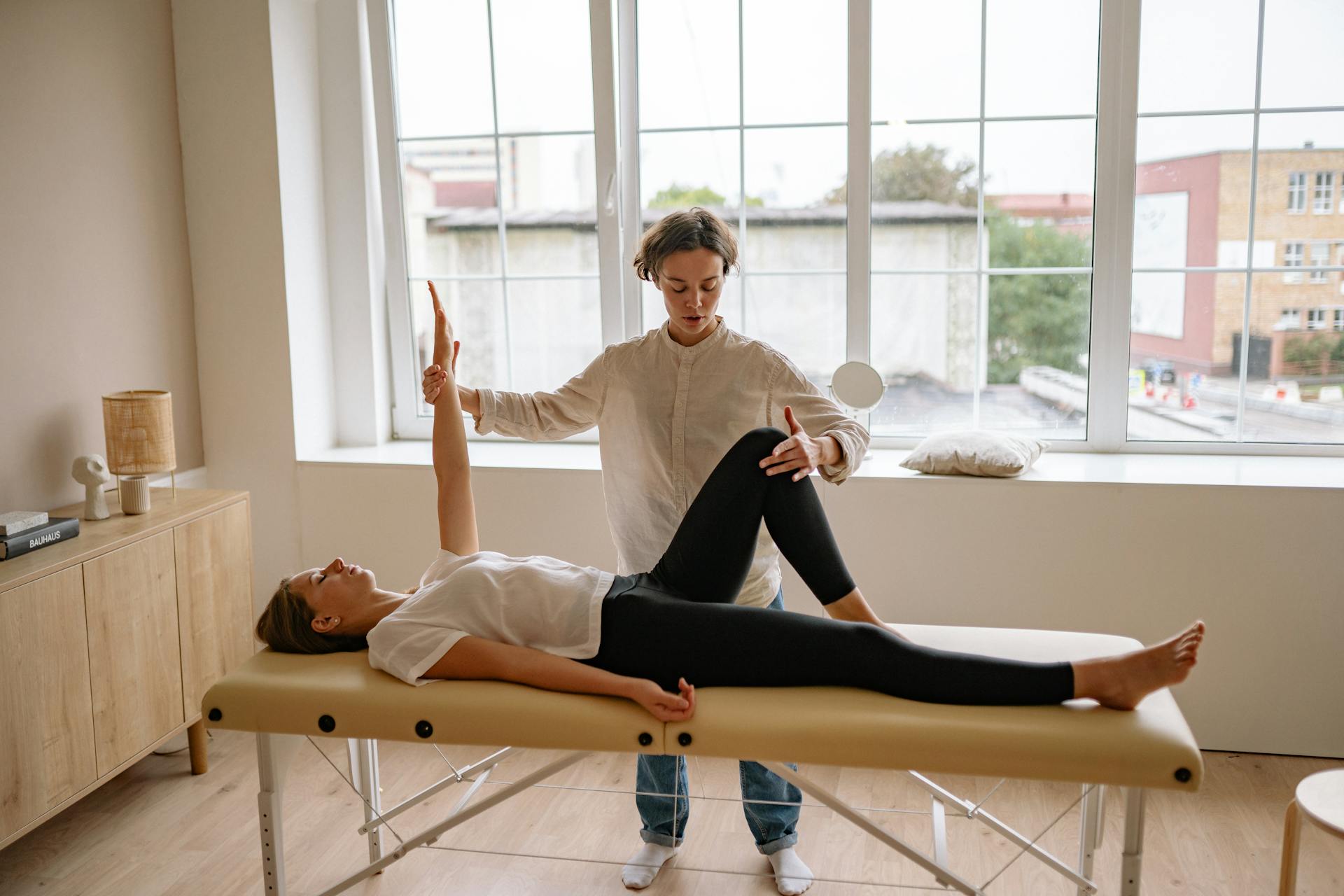
Passive stretching relies on external assistance, such as your physiotherapist ,a partner, gravity, or props, to achieve a stretch. It is effective in targeting specific muscles and promoting relaxation.It is more suitable for individuals who cannot perform the active stretched positions due to pain or have excessive muscle tightness
Frequency and Duration of Static Stretching
- as instructed by your therapist generally after exercises or 2-3 times per week
- 15-60 seconds per stretch
2. Dynamic Stretching
Dynamic stretching involves controlled active movements through a full range of motion, promoting increased blood flow, flexibility, and neuromuscular activation.
Advantages of Dynamic Stretching
- Improved athletic performance
- Enhanced joint flexibility
- Effective warm-up for physical activities
3. Pre-Contraction Stretching(4)
Pre-contraction stretching combines static stretching either active or passive with muscle contractions to improve muscle length and flexibility.
Advantages of Pre-Contraction Stretching
- Increased muscle elasticity and contractile ability
- Enhanced muscle strength
- Improved joint stability
What Influences Your Level of Flexibility?
- Genetics
- Age
- Gender
- Physical activity level
- Hydration
- History of sports involved in
How Much Stretching Should You Do?
- Stretching should be done for at least 10-15 minutes per session which should include both static and dynamic stretches.
- Stretching should be performed as cool-down activity in general training session
- Taking a hot pack before stretching makes it more efficient
- Customize based on individual fitness goals and needs
Mechanisms of Stretching
The Stretch Reflex
The stretch reflex is an involuntary response to a rapid stretch of a muscle, aiming to prevent overstretching and maintain muscle tone. (5)Understanding this mechanism is crucial for effective and safe stretching.Therefore stretching must be performed at a slow gradual pace in order to prevent muscle spasm and guarding and further injury to the muscle.
Final Words
- Consult with a physiotherapist or fitness professional for personalized stretching routines.
- Focus on proper form and technique to prevent injuries
- Combine stretching with a well-rounded fitness regimen for optimal results
Bibliography
1.da Costa BR, Vieira ER. Stretching to reduce work-related musculoskeletal disorders: a systematic review. J Rehabil Med. 2008 May;40(5):321-8. doi: 10.2340/16501977-0204. PMID: 18461255.
2. https://www.inspiresa.com.au/the-pros-and-cons-of-different-stretching-methods/
3. O'Sullivan K, Murray E, Sainsbury D. The effect of warm-up, static stretching and dynamic stretching on hamstring flexibility in previously injured subjects. BMC Musculoskelet Disord. 2009 Apr 16;10:37. doi: 10.1186/1471-2474-10-37. PMID: 19371432; PMCID: PMC2679703.
4.https://www.ncbi.nlm.nih.gov/pmc/articles/PMC3273886/
5. Ogiso K, McBride JM, Finni T, Komi PV. Stretch-reflex mechanical response to varying types of previous muscle activities. J Electromyogr Kinesiol. 2002 Feb;12(1):27-36. doi: 10.1016/s1050-6411(01)00031-1. PMID: 11804809.