How to Take Care of Elderly at Home: A Practical Guide for Families
There's a moment most of us recognise. You're sitting across from your ageing parent at dinner, and something shifts — a slower gait, a forgotten word, a quietly untouched plate. And you think: I need to pay closer attention.
Caring for an elderly parent at home is one of the most meaningful things a family can do. But it is also one of the most complex. It goes far beyond helping with medicines or arranging a doctor's visit. It's about making sure someone you love feels safe, respected, and still very much a part of life — even as their needs grow.
This guide walks you through what elderly care at home actually involves, what to watch for, and how families can manage it without burning out. If you work full-time, live in another city, or simply find the responsibility overwhelming, you're not alone — and you don't have to do it all by yourself.
What Does Elderly Care at Home Actually Involve?
Before jumping into tips, it helps to understand the full picture. Elderly care isn't a single thing. It spans several areas of daily life, and different people need different kinds of support.
Daily Living Assistance
This covers the basics: bathing, dressing, grooming, toileting, eating, and maintaining household routines. For many seniors, this is the first area where they need help — and one of the most sensitive, because it involves privacy and dignity.
Health and Medical Support
Medicines, vital monitoring, doctor appointments, lab tests, post-surgery care, and managing chronic conditions like diabetes, hypertension, or heart disease. This is the area families often focus on first, but it's only one part of the picture.
Mobility and Physical Wellbeing
Safe movement around the home, walking with assistance, physiotherapy for rehabilitation, and prescribed exercise. Falls are one of the leading causes of serious injury in older adults — mobility support directly reduces that risk.
Emotional and Social Support
Companionship, conversation, engagement with hobbies, family interaction, and staying connected to the world outside. This is the dimension families most commonly overlook — and the one that has the largest impact on quality of life.
Practical Assistance
Banking, forms and paperwork, travel arrangements, technology help, home maintenance. For seniors living alone, these tasks can become significant obstacles that quietly erode independence.
This broader view matters because the best elder care isn't purely medical. A senior who has their medicines managed perfectly but spends twelve hours a day alone in a room is not receiving good care. Senocare's approach reflects this — customised elder care packages cover over 65 services across health, daily living, home maintenance, travel, and more, specifically because care needs don't stop at clinical boundaries.
10 Practical Ways to Take Care of Elderly People at Home
1. Create a Safe Home Environment
This is the foundation. Most home accidents for older adults happen in familiar spaces — kitchens, bathrooms, corridors — precisely because familiarity breeds a kind of carelessness.
Walk through the home and check:
- Remove loose rugs and floor mats that can slip
- Improve lighting in hallways, staircases, and bathrooms
- Keep frequently used items within easy reach — no climbing on chairs or stools
- Install grab bars near the toilet and in the shower
- Keep floors dry and clean up spills immediately
- Reduce clutter and unnecessary obstacles on walking routes
- Keep emergency numbers visible and accessible
Small changes add up. A bathroom with a grab bar and a non-slip mat is a fundamentally safer space than one without.
2. Help Them Follow a Regular Daily Routine
Predictability is comforting for older adults, particularly for those with cognitive changes or anxiety. A consistent daily structure — regular wake and sleep times, meals at similar hours, medicines at fixed times, scheduled rest — reduces confusion and makes care easier to manage for everyone.
Routine doesn't mean rigidity. There's room for flexibility. But anchoring the day to a familiar rhythm genuinely helps.
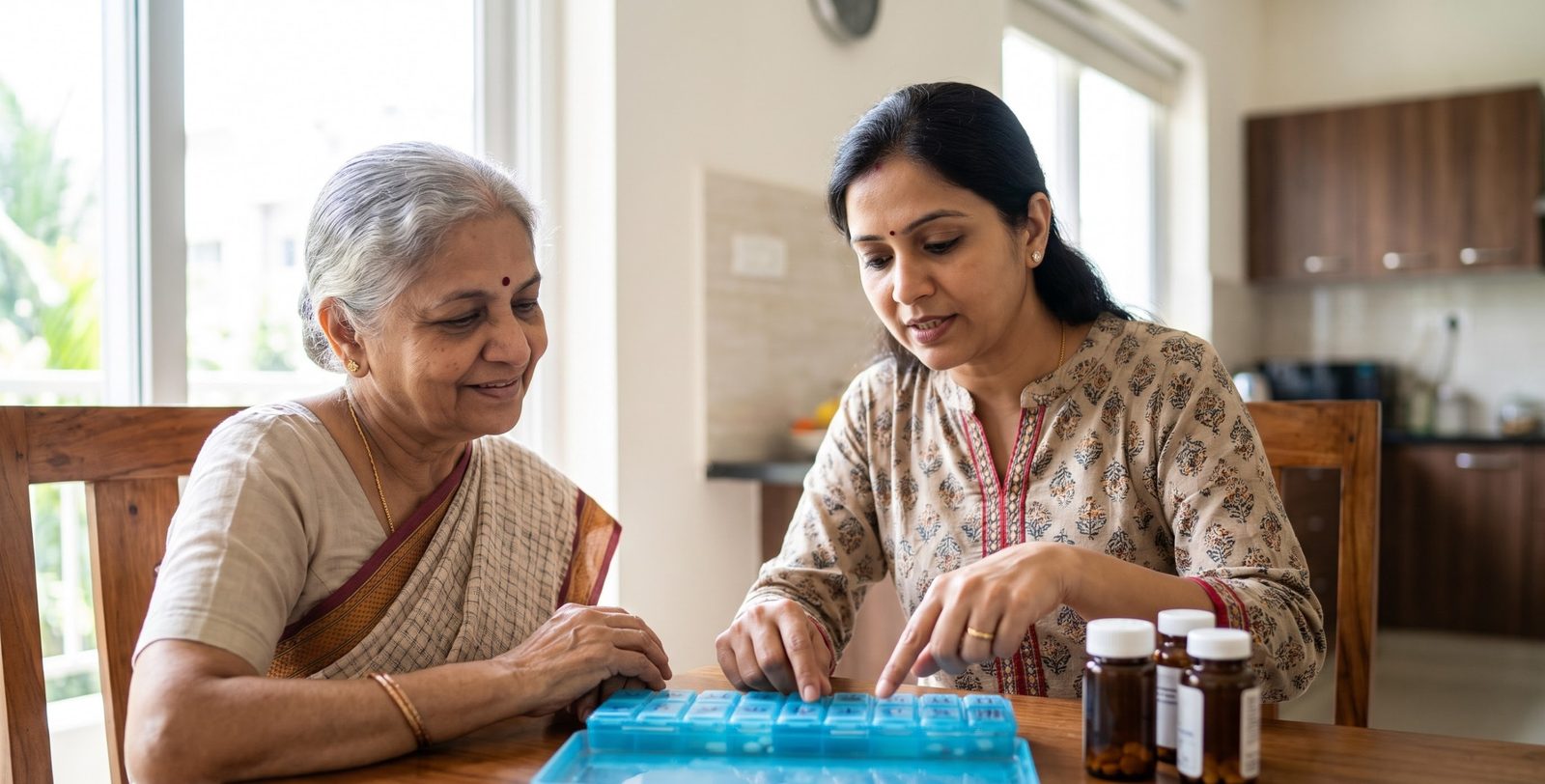
3. Manage Medicines Carefully
Medicine management is one of the most consequential parts of caring for an elderly parent at home, and one of the easiest to get wrong.
A few practical steps:
- Keep an updated, written list of all medications, doses, and timings
- Use a weekly pill organiser to track doses
- Never change or stop a prescribed medication without medical advice
- Watch for unusual reactions — drowsiness, confusion, stomach upset — and raise them with the doctor
- Keep prescriptions and medical records organised and accessible
- Store medicines correctly (away from heat and moisture)
Senocare includes prescription-based medicine top-ups and pillbox management as part of its customised care packages — useful for families where day-to-day oversight is difficult.
4. Pay Attention to Nutrition and Hydration
Older adults often eat less, feel less thirsty, and have more specific dietary requirements based on their health conditions. Nutritional needs vary significantly depending on whether someone has diabetes, kidney disease, hypertension, or difficulty swallowing.
General guidelines:
- Ensure regular, balanced meals — skipped meals are more serious at this age
- Encourage adequate fluid intake throughout the day
- If chewing or swallowing is difficult, adjust food textures appropriately
- Follow dietary recommendations from their doctor or dietitian
- Watch for changes in appetite — a sudden disinterest in food can signal something worth raising with a doctor
Avoid applying a generic "elderly diet" without professional input. When in doubt, ask their physician or a qualified dietitian.
5. Encourage Safe Movement and Physical Activity
Prolonged inactivity is harmful at any age, but particularly for older adults. It accelerates muscle loss, increases fall risk, and affects mood and sleep.
The right approach depends on their condition:
- Encourage appropriate, regular movement even if it's just short walks around the home
- Follow physiotherapist recommendations for prescribed exercises
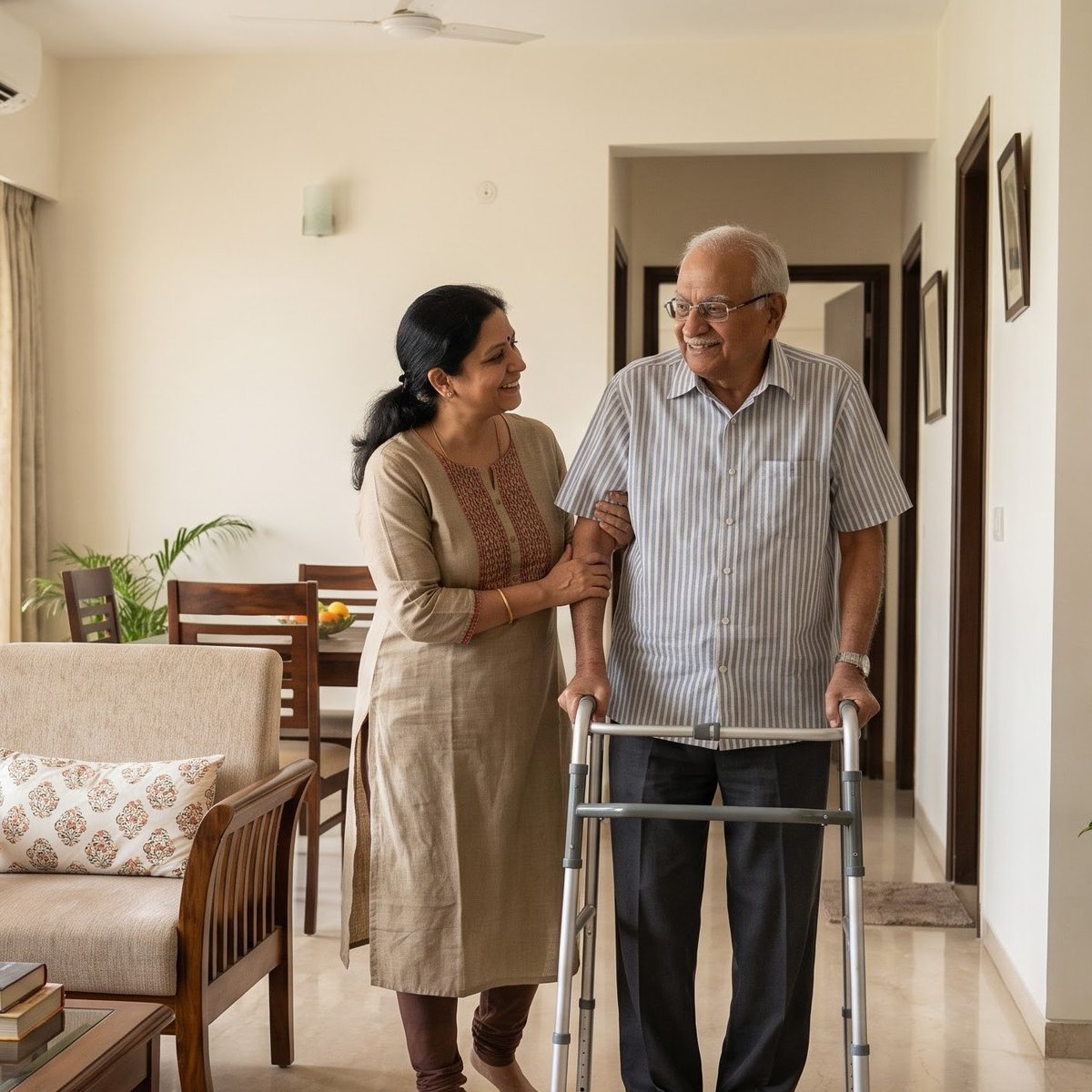
- Use walking aids — canes, walkers, wheelchairs — when they've been prescribed, not as a last resort
- Make movement around the home safer through the changes mentioned in point 1
Senocare provides physiotherapy at home for seniors as part of its healthcare support, particularly valuable during post-surgery recovery or when mobility has declined significantly.
6. Maintain Personal Hygiene and Comfort
Bathing, oral hygiene, hair and skin care, changing clothes and bedlinen, toileting support, and for those with limited mobility — regular skin checks to prevent pressure injuries. These are daily needs that require sensitivity.
It helps to understand the distinction between attendant care and nursing care here. An attendant supports with activities of daily living — bathing, hygiene, dressing, companionship. A nurse handles clinical care — wounds, medicines, monitoring. Senocare's home nursing care page explains this distinction clearly, which matters when you're trying to identify the right kind of support.
7. Keep Track of Their Health
Regular monitoring gives you early warning of problems before they become emergencies. What to track will depend on their specific conditions, but a general framework:
| What to Monitor | Why It Matters |
|---|---|
| Blood pressure | Helps track certain cardiovascular conditions |
| Blood sugar | Important for people with diabetes |
| Temperature | Can indicate an infection or illness |
| Oxygen levels | Relevant for respiratory or cardiac patients |
| Weight | Unexpected changes may need medical attention |
| Appetite | Can signal health or wellbeing changes |
| Mobility | Helps identify functional decline early |
| Mood and behaviour | Important for emotional and cognitive wellbeing |
Monitoring should follow the person's medical needs and their doctor's recommendations — not a generic checklist.
Senocare's home healthcare services include vital monitoring, doctor consultations, home visits, and maintaining medical records — practical support that takes the coordination burden off families.
8. Give Emotional and Social Support
This section deserves more weight than it typically gets in care guides.
An older adult who is safe, fed, and medicated but lonely is not doing well. Social isolation accelerates cognitive decline. It increases the risk of depression. It makes existing conditions harder to manage. And it's remarkably common — particularly for seniors whose children live far away or whose circle of friends has diminished over the years.
Some things that genuinely help:
- Talk to them regularly — not just functional check-ins, but real conversation
- Ask about their preferences, their memories, what they'd like to do
- Encourage hobbies and activities they've always enjoyed
- Help them stay connected with friends and extended family
- Include them in family decisions where appropriate
- Avoid talking about them as if they're not in the room
- Respect their privacy and their desire for independence
Good elderly care is not only about completing tasks. It is about preserving a person's independence, dignity, and sense of belonging. That's worth repeating.
9. Make Doctor Visits and Tests Easier
Healthcare coordination becomes increasingly difficult as age and mobility challenges grow. Regular check-ups, managing multiple specialists, keeping track of prescriptions, and getting to appointments — it's a lot.
Practical steps:
- Schedule and keep regular health check-ups
- Maintain a single, organised medical file with all records, prescriptions, and reports
- Arrange transportation for appointments or ask about home visit options
- Look into home sample collection for blood tests when clinic visits are difficult
- Ask about teleconsultation for follow-up appointments where physical examination isn't necessary
Senocare offers doctor home visits, teleconsultations, lab sample collection at home, and hospitalisation assistance — services that make a meaningful difference for seniors who find travel difficult or stressful.
10. Don't Ignore Loneliness and Mental Wellbeing
The loss of a spouse, reduced mobility, retirement, children living in another city, health anxiety, and cognitive changes — older adults navigate a level of loss and transition that most of us won't fully appreciate until we reach that stage ourselves.
Be present to the signs: withdrawal from conversation, disinterest in things they once enjoyed, significant changes in sleep, unusual agitation or confusion, persistent sadness.
Don't attempt to diagnose depression, dementia, or anxiety from a checklist. Instead: if you notice significant or persistent changes in mood, behaviour, memory, or daily functioning, discuss them with a qualified healthcare professional. Early intervention matters.
Senocare's dementia care services provide specialised support for seniors who need additional cognitive and daily-living assistance.
How to Care for an Elderly Parent After Surgery or Hospital Discharge
Discharge day often catches families off guard. The hospital sends your parent home with a folder of instructions, a list of medicines, and sometimes equipment you've never seen before — and expects you to manage.
Before bringing them home:
- Understand the discharge instructions fully before leaving — ask the care team to explain anything unclear
- Have all medicines ready and organised
- Prepare any equipment needed (hospital bed, commode, walker)
- Arrange adequate help at home from day one
During recovery:
- Follow wound care instructions as given — don't improvise
- Manage medicines strictly as prescribed
- Assist with mobility — early movement is usually encouraged, but only as directed
- Keep follow-up appointments
- Monitor for warning signs: fever, increased pain, wound changes, confusion
When professional help makes sense: Post-surgical care at home often exceeds what family members can safely manage alone. Senocare's home nursing services specifically include post-operative care, wound care, vital monitoring, and support for higher-dependency patients — bridging the gap between hospital discharge and full recovery.
When Does an Elderly Parent Need Professional Care at Home?
Not everyone needs professional support. But there are situations where family-managed care alone isn't sufficient — and recognising them early makes a significant difference.
Consider professional home care when:
- Your parent needs consistent help with daily activities (bathing, dressing, toileting)
- Family members cannot be reliably present during the day
- Medication management has become complicated or error-prone
- There has been a recent hospitalisation or surgery
- Mobility has significantly declined
- Dementia has progressed to the point where supervision is needed
- Continuous monitoring is required for a chronic or serious condition
- The family lives in another city or abroad
- Caregiver responsibilities are becoming physically or emotionally unsustainable
This isn't failure. Knowing when to bring in professional support is part of good care.
Nurse vs Attendant vs Care Manager: What Kind of Elderly Care Do You Need?
This is one of the most common sources of confusion for families starting to explore options.
| Type of Support | Best Suited For |
|---|---|
| Attendant | Daily living, hygiene, mobility assistance, and companionship |
| Home Nurse | Clinical and medical care, monitoring, wound care, injections |
| Physiotherapist | Mobility, rehabilitation, prescribed physical therapy |
| Doctor Home Visit | Medical consultation at home without a clinic trip |
| Care Manager | Coordinating multiple elder-care needs from a single point of contact |
Many families need more than one type. The challenge is coordination — arranging a nurse, an attendant, a physiotherapist, and doctor visits separately is complicated and exhausting. Senocare's CareManager model addresses this directly: one person who knows your parent's needs, coordinates the relevant services, and keeps the family informed.
How Senocare Helps Families Care for Elderly Parents at Home
Families often want to be the ones caring for their parents — but can't always manage every medical, household, and practical responsibility. Senocare provides personalised elder-care support designed around individual needs, not packages built for an average that doesn't quite fit anyone.
Home Nursing Care
Qualified nurses providing vital monitoring, medication support, wound care, post-operative care, and higher-dependency support. Currently available across Delhi, Noida, Gurgaon, and Faridabad.
Attendant Care
Support with bathing, hygiene, mobility, daily activities, and companionship — delivered with dignity and sensitivity.
Doctor at Home
Medical consultation at home, with the benefit of continuity, personalised attention, and context that a rushed clinic visit rarely allows.
Physiotherapy at Home
For mobility, rehabilitation, and prescribed physical therapy — particularly valuable after a stroke, joint replacement, or fracture.
Dementia Care
Specialised support for seniors with cognitive decline, combining structured daily routines with trained companionship and safety management.
Palliative Care at Home
Multidisciplinary comfort care for seniors living with serious or advanced illness — involving doctors, nurses, and physiotherapists working together.
ICU Care at Home
For higher-dependency patients transitioning from the acute hospital phase — continuous monitoring, specialised equipment, and clinical care in the comfort of home.
Care Manager
A single, dedicated coordinator who knows your parent's situation, manages their care across multiple services, and keeps the family updated. For families whose children live away, this is often the most valuable service of all.
Support Beyond Healthcare
What makes Senocare genuinely different from a standard home nursing provider: travel assistance, help with forms and official filings, home maintenance coordination, technology support, hospital and bank visit accompaniment, medicine management, and regular family updates. Covered across their customised elder care packages.
How to Take Care of Elderly Parents When You Live in Another City or Country
This is harder than most guides acknowledge. The guilt, the anxiety, the reliance on incomplete information from a parent who doesn't want to worry you — it's a particular kind of stress.
Practical steps that help:
- Maintain regular video calls — schedule them so they're expected, not sporadic
- Keep an updated emergency contact list at the location
- Ensure you have access to their medical records and prescriptions
- Arrange reliable local support — family, trusted neighbour, or professional
- Schedule regular health check-ups and get reports shared with you
- Have a named person who can respond quickly if something urgent happens
- Consider professional care coordination so you're not dependent on secondhand information
A professional CareManager can act as the local point of coordination when you can't be there — someone who knows your parent, communicates regularly with you, and handles situations on the ground. For many families, this is what makes long-distance care actually workable.
When Should You Consider 24/7 Elderly Care at Home?
Continuous, round-the-clock care is a significant step — but sometimes the right one.
Situations where 24/7 care is worth considering:
- Bedridden seniors requiring regular repositioning and hygiene support
- Post-surgery patients in the acute recovery phase
- High-dependency care after ICU discharge
- Dementia that has progressed to the point of requiring constant supervision
- Seniors with serious chronic illness requiring ongoing monitoring
- Frequent assistance with basic daily activities throughout the day and night
Senocare's ICU care at home service covers higher-dependency patients who need continuous monitoring and clinical support beyond the hospital phase.
A Simple Daily Elderly Care Checklist
Keep this somewhere visible — or share it with whoever is managing daily care.
Morning
- Wake-up assistance and hygiene (bathing, grooming, oral care)
- Medicines as prescribed
- Breakfast and adequate fluid intake
- Vital checks if medically required
- Mobility/exercise as advised by doctor or physiotherapist
Afternoon
- Lunch
- Afternoon medicines if applicable
- Rest period
- Conversation, companionship, or a preferred activity
- Fluid intake reminder
Evening
- Light activity or movement
- Dinner
- Evening medicines
- Prepare for bedtime (hygiene, comfortable clothing, environment)
- Quick safety check of the home
Weekly
- Review medicines and check stock
- Confirm upcoming appointments
- Update or review medical records
- Check household supplies
- Speak with the care team or family about any changes observed
When Should You Call a Doctor Immediately?
Some situations require urgent medical attention — not a scheduled home visit, not a teleconsult for later in the week.
Call for emergency medical help immediately if your elderly family member experiences:
- Sudden difficulty breathing
- Chest pain
- Sudden confusion or loss of consciousness
- A serious fall with suspected injury
- Sudden weakness on one side of the body or face
- Uncontrolled bleeding
- A significant, unexplained change in responsiveness
In an emergency, contact local emergency medical services — don't wait for a home-care provider to respond. Senocare's services support ongoing care and recovery; they are not a substitute for emergency medical response.
Conclusion
Caring for elderly parents at home doesn't mean doing everything alone. It means building the right combination of family involvement, daily routines, safety, medical oversight, and professional support — tailored to who your parent actually is, not a generic care template.
What matters most is that they feel safe, seen, and connected. Not just managed.
If your parents need additional support at home, Senocare can help you build care around their individual needs — from nursing and doctor visits to physiotherapy, daily assistance, and practical elder-care support across home, health, and life.
Disclaimer: This article is for general informational purposes and does not constitute medical advice. Please consult a qualified healthcare professional for guidance specific to your family member's health and care needs.
Frequently Asked Questions
Start with safety (home modifications), establish a daily routine, manage medicines carefully, monitor health, support nutrition and mobility, and—critically—make time for emotional connection. Professional support, when needed, helps families sustain this over the long term without burning out.
Physical safety, consistent medical care, proper nutrition and hydration, mobility support, personal hygiene, and emotional connection. These needs vary in intensity depending on age, health, and individual circumstance.
Remove fall hazards (loose rugs, poor lighting, obstacles), install grab bars in bathrooms, keep frequently used items within reach, and ensure emergency numbers are accessible. For seniors with cognitive decline, additional supervision may be needed.
This depends entirely on their health conditions. Someone managing multiple chronic conditions may need checks every few weeks. A relatively healthy senior may need a comprehensive check-up once or twice a year. Follow their doctor's recommended schedule.
When their care involves clinical needs—wound care, injections, IV medications, post-operative monitoring, or ongoing vital monitoring—that go beyond what a family member or attendant can safely manage. Senocare's home nursing services cover these situations specifically.
An attendant helps with daily living activities—bathing, hygiene, dressing, mobility, and companionship. A nurse is a qualified healthcare professional who provides clinical care. Both are often needed, but for different reasons.
Yes. Doctor home visits, teleconsultations, home physiotherapy, nursing care, lab sample collection, and even ICU-level care can all be delivered at home in appropriate circumstances. Senocare provides most of these services across Delhi NCR.
Consistent communication, organised medical records, a reliable local support network, and—for families who need it—a professional CareManager who coordinates care on the ground and keeps family members informed. Senocare's model is specifically designed for this situation.