ICU Care at Home in Delhi NCR — Senocare

Content is medically reviewed by:
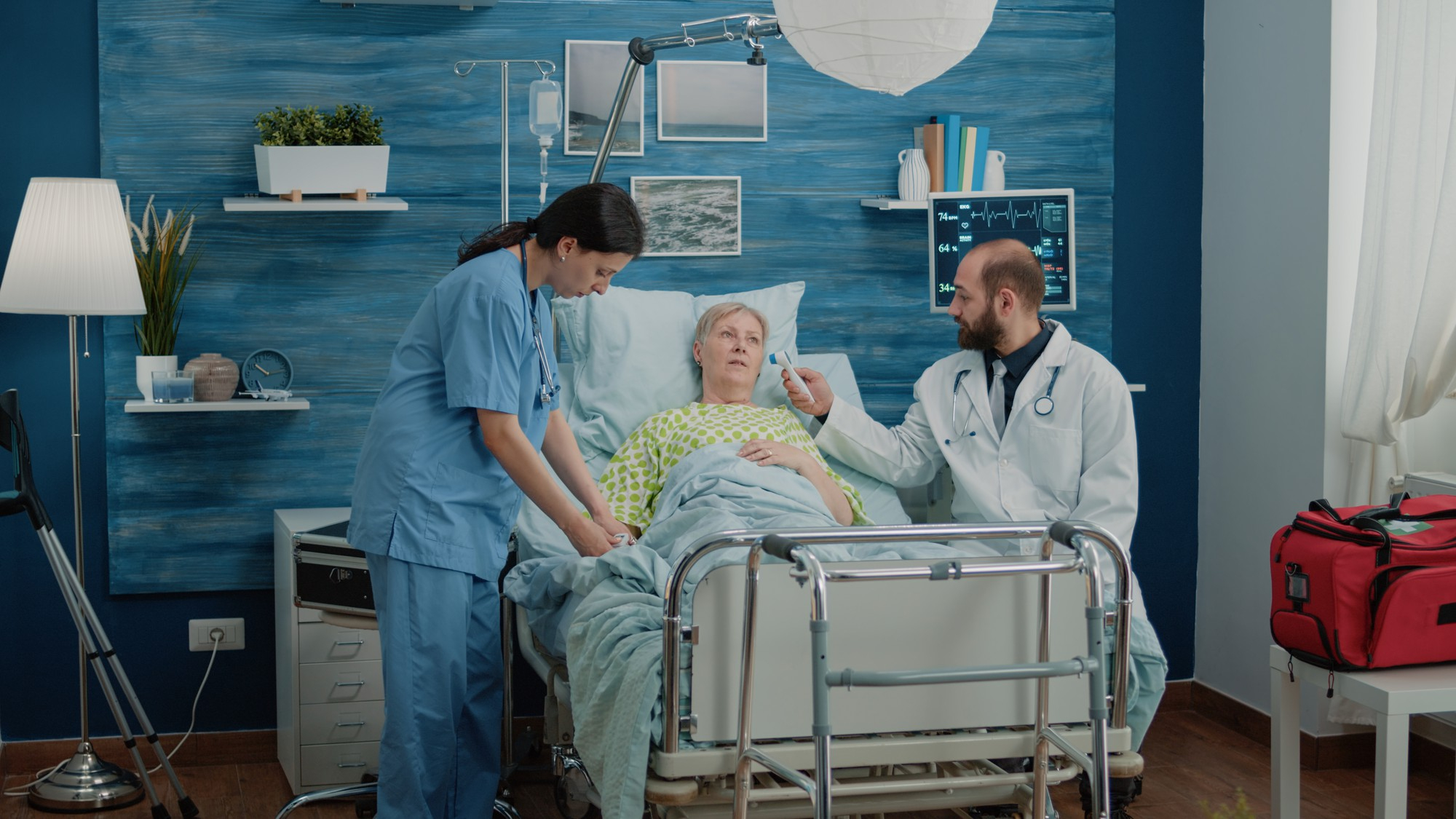
Senocare's ICU care at home service brings hospital-grade critical care — 24x7 monitoring, skilled nursing, and ventilator support — to patients in Delhi NCR and Gurgaon who no longer need to be in a hospital ICU but still require intensive monitoring. Our service reimagines critical care by providing high dependency care services to patients who have progressed from the acute phase of their disease but still require extensive monitoring and assistance. This home-based critical care service combines knowledge, compassion, and cutting-edge technology to safeguard patients' well-being in the comfort of their own homes.
Benefits of Choosing a Doctor at Home Service
Key Components of ICU at Home
Get medical attention in the comfort of your home, saving time and Senocare India's ICU at Home service encompasses a comprehensive range of critical care elements, designed to provide a seamless and holistic healthcare experience. These components include:effort.
Skilled Nursing Care
A team of skilled and experienced nurses provides expert medical attention and personalized care to patients, ensuring their safety and comfort.
24x7 Vital Monitoring
Cutting-edge monitoring technology allows continuous tracking of vital signs, providing real-time updates to healthcare professionals for prompt intervention if necessary.
IV Administration
Expert administration of intravenous medications and fluids ensures that patients receive the necessary treatments without the need for hospitalization.
Equipment Handling
The management of medical equipment and devices is handled proficiently, guaranteeing accurate functioning and minimizing risks.
Pressure Ulcer Prevention
Specialized care techniques are employed to prevent pressure ulcers, which can often arise during extended periods of immobility.
Care of Tubes and Catheters
Patients with medical tubes and catheters receive diligent care to prevent infections and ensure optimal functioning.
Infection Control
Stringent infection control measures are in place to maintain a safe and sterile environment for the patient.
Wound Dressing
Expert wound care is provided to promote healing and prevent complications.
DVT Prevention
Proactive measures are taken to prevent deep vein thrombosis (DVT) through strategies such as mobilization and compression techniques.
Physiotherapy
Tailored physiotherapy sessions aid in maintaining mobility and promoting recovery.
Activities of Daily Living
Patients' essential requirements are provided through assistance with everyday tasks, which improves their overall comfort.
Psychological Counselling
Emotional well-being is addressed through psychological counseling, recognizing the importance of mental health during recovery.
ICU Care at Home vs. Nursing Home ICU Care
There's no single right answer here — it comes down to the patient's condition and what the family can realistically manage.
Cost is usually the first question families ask. Home ICU care tends to run cheaper than an extended nursing home or hospital stay, mainly because you're not paying for room charges and hospital overhead; you're paying for the nursing, equipment and monitoring directly.
Infection risk is the second big factor, and it's not a small one. Hospitals and nursing homes carry a real risk of hospital-acquired infections, especially for anyone whose immune system is already compromised. Home care sidesteps most of that simply by removing the shared environment.
There's also the harder-to-quantify part, having family around. Patients recovering at home tend to have people they know close by instead of a rotating hospital staff, and for a lot of families that matters as much as the clinical numbers.
That said, home ICU care isn't the right call for everyone. If a patient is unstable, might need emergency surgery, or requires life support beyond what can be safely run at home, they need to stay in a hospital or nursing home ICU, full stop. We check for this before taking on any case. We'd rather turn a case away than put a patient at risk to fill a bed.
Why Choose ICU at Home with Senocare India
Opting for ICU care at home offers numerous benefits that align with the patient's well-being and family's peace of mind:
Reduction in Hospital Stay
Patients can experience a reduction in the length of hospital stays, as their recovery progresses in the familiar and comfortable environment of their home.
Emotional Support
ICU patients receive enhanced emotional support from their families and caregivers, contributing to a more holistic healing process.
Multidisciplinary Approach
A diverse team of medical specialists creates the treatment programmes, offering a complete and individualised approach.
Complication Prevention
By receiving care at home, patients are less exposed to hospital-acquired infections and complications.
Senocare India's Commitment:
Senocare India is a shining example of innovation and compassionate care, providing ICU services outside of hospital boundaries.With hospital-level quality, and a highly trained staff, Senocare India offers a seamless transition from hospital care to the comforts of home, ensuring the best quality critical care for patients and improved overall quality of life. Whether it's prolonged ICU stays, cancer care, stroke care, or managing ventilators at home, Senocare India's ICU at Home service redefines critical care and promises optimal well-being for patients.
For a seamless and personalized critical care experience that brings hospital-level expertise to your doorstep, choose Senocare India's ICU at Home. Take a step towards embracing advanced critical care in the comfort of your own home.
FAQ
It's ICU-level treatment delivered inside the patient's own home instead of a hospital. Once someone is past the critical, unstable phase but still needs close monitoring, IV lines, ventilator support or wound care, a trained nursing team can manage all of that at home. Senocare runs this in Delhi NCR and Gurgaon with the same monitoring standards you'd expect in a hospital ICU.
Price range: ₹1.5–2 lakhs. The final cost depends mainly on whether the patient requires 12-hour or 24-hour nursing care, and whether ventilator support or a multipara monitor is needed. Please call us with the patient’s details, and we’ll provide a case-specific quote rather than a generic package price.
For a stable patient, yes — with the right nurse-to-patient ratio and monitoring in place. What it's not good for: patients who are still unstable, or who might need emergency surgery on short notice. Those cases belong in a hospital. We assess this before agreeing to take on a case, not after.
Depends on the patient and the family. If someone's stable and the family can support round-the-clock nursing at home, home ICU care is usually cheaper and lower-risk for infection. If the home isn't set up for it, or the patient needs more institutional backup, a nursing home ICU makes more sense. We can walk you through which fits your situation.
Yes, our nursing staff handle ventilator care at home under medical supervision, for patients who've been stabilized and are transitioning out of the hospital.