Lower Back Pain Exercises You Can Try at Home Carefully
Most lower back pain settles on its own, and staying gently active usually helps more than resting. This guide covers lower back pain exercises that are commonly recommended for home use, how to do them, and the warning signs that mean you should stop and get medical help instead. The advice draws on the NHS back pain guidance and the exercise guide from Versus Arthritis.
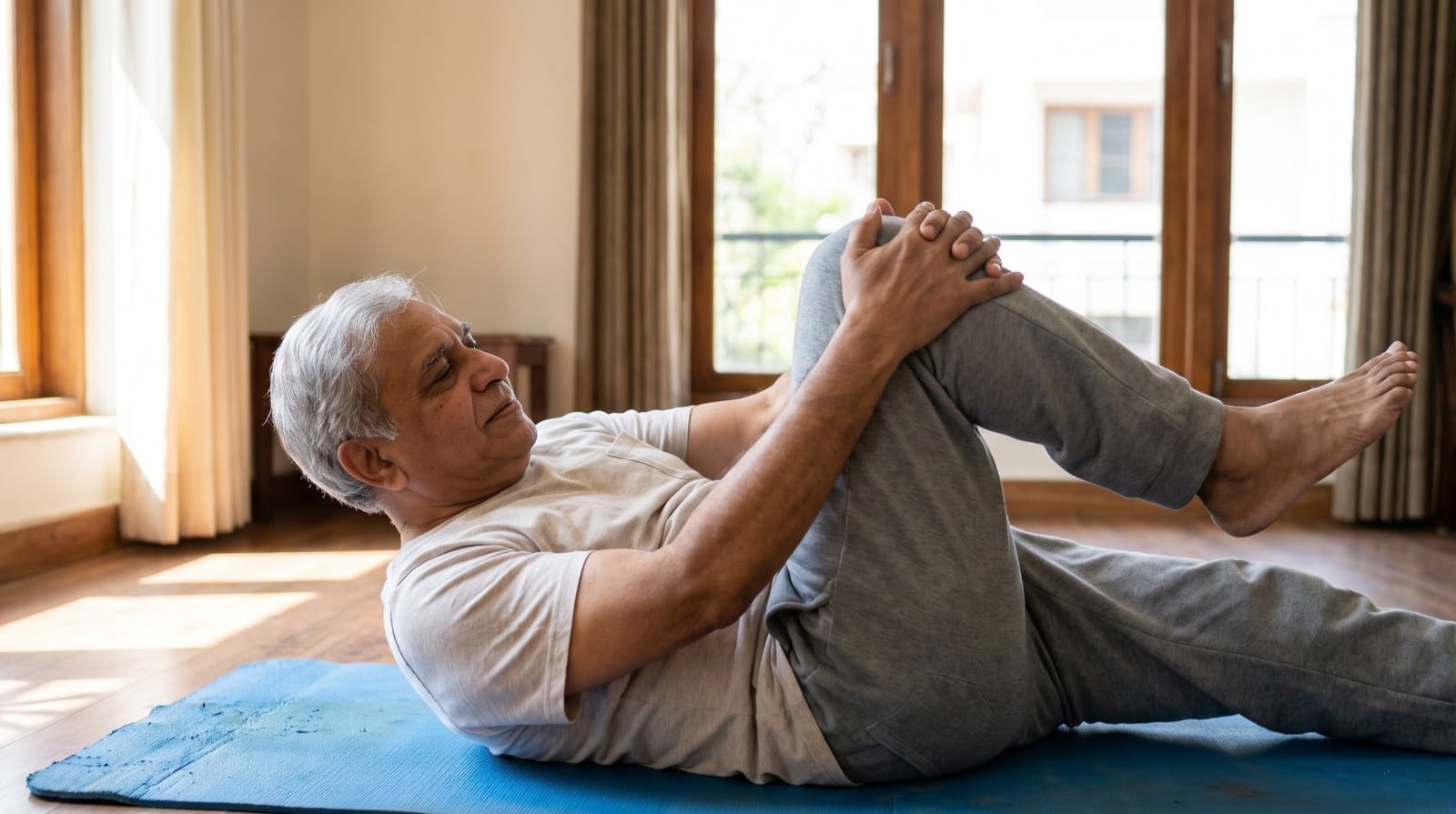
Knees to chest: a gentle place to start
Lie on your back with your knees bent and feet flat on the floor, then gently pull one knee toward your chest before relaxing and switching sides. It is one of the six exercises covered later in this guide.
Check for warning signs first
Exercise is not the right first step for every kind of back pain. The NHS lists signs that need medical attention rather than home exercise.
Get medical help urgently if you have:
- Sudden severe pain, or pain that is getting worse quickly
- Feeling hot, cold, shivery or generally unwell with the back pain
Go to an emergency department if you have:
- Pain, tingling, weakness or numbness in both legs
- Loss of feeling around the genitals or anus
- Changes in bladder or bowel control
- Changes in sexual sensation or function
- Chest pain
- Back pain that started after a serious accident
The NHS also advises seeing a doctor if pain does not improve after a few weeks of home treatment, stops you doing daily activities, is worse at night or does not ease with rest, or comes with unexplained weight loss or a lump or change in the shape of your back. Note that the NHS gives UK emergency numbers. In India, use your local emergency number or go to the nearest hospital.
Should you exercise with lower back pain?
For common back pain, the NHS says to keep up your daily activities and notes that walking, swimming, yoga and pilates may help. It advises against staying in bed for long periods. Specific back exercises and stretches can also help, but the NHS says to stop if the pain gets worse and to see a doctor.
Before you start
Versus Arthritis gives some simple ground rules:
- Start slowly and build up gradually if you are new to exercise.
- Drink water during exercise and keep plenty of space around you.
- Get advice from a healthcare professional or fitness instructor if you have any concerns.
As a general suggestion, use a firm mat or carpeted floor, and do the exercises when your pain is at its lowest rather than straight after a long period of sitting.
Six lower back pain exercises to start with
The hold times and repetitions below come from the Versus Arthritis guide. Keep breathing throughout, and stop if an exercise makes the pain worse.
| Exercise | How to do it | Hold and repeat |
|---|---|---|
| Pelvic tilt | Lie on your back with knees bent. Tighten your stomach muscles so your lower back flattens against the floor | Hold 5 seconds, 5 times |
| Knee rolls | Lie on your back, knees bent and feet together. Roll both knees to one side, keeping your shoulders flat, then return and roll to the other side | Hold 10 seconds each side, 3 times each side |
| Knees to chest | Lie on your back with knees bent and feet flat. Gently pull one knee toward your chest, then relax and switch | Hold 5 seconds, 5 times each side |
| Stomach tone | Lie face down with arms by your sides and head turned to one side. Gently pull in the stomach muscles around your belly button | Hold 5 seconds, 3 times. Build up to 10 seconds |
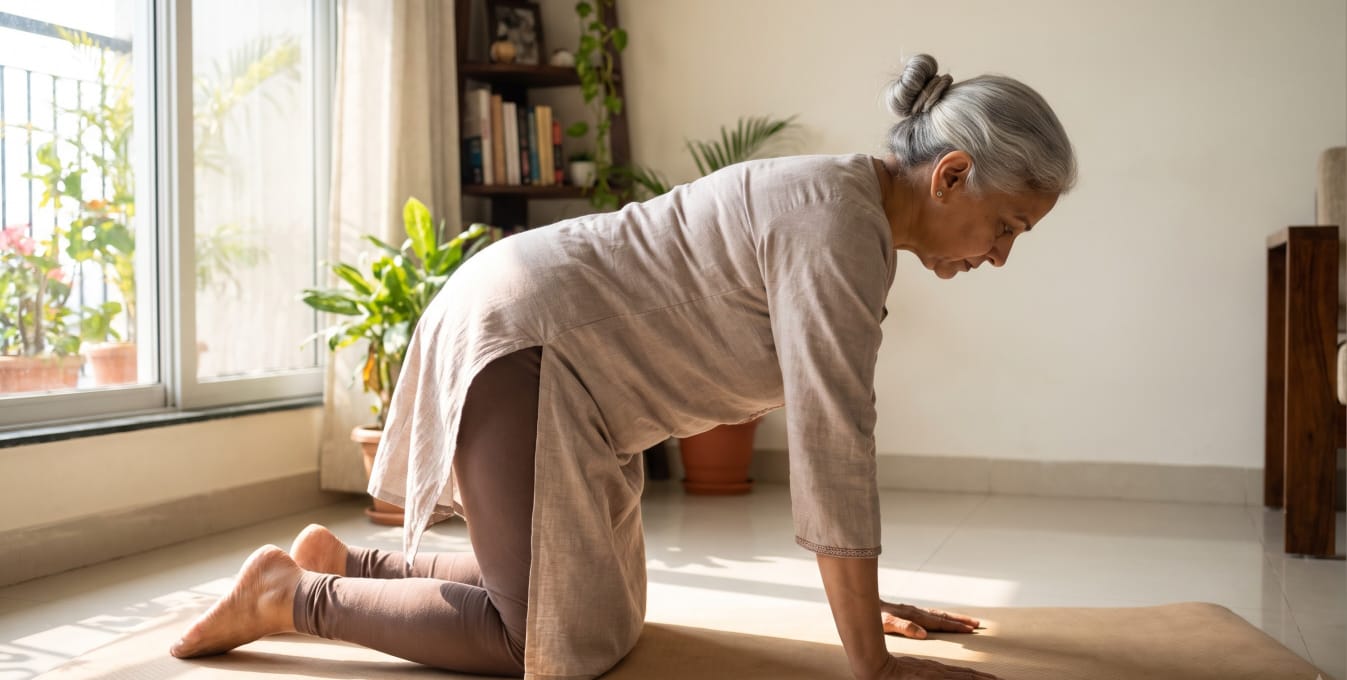
| Deep stomach muscle tone | Kneel on all fours with a small curve in your lower back. Relax your stomach, then pull your lower stomach up to lift your back without arching it | Hold 10 seconds, 10 times |
| Back stabiliser | On all fours with a straight back, tighten your stomach and raise one arm in front of you, keeping your pelvis level and your body still | Hold 10 seconds, 10 times each side |
To progress the back stabiliser, Versus Arthritis suggests lifting one leg behind you instead of an arm. A physiotherapist can tell you when you are ready for that.
A simple way to fit them into your week
The sources do not prescribe a schedule, so this is a general suggestion. Pick three or four of the exercises, do them once a day, and add another exercise each week if they feel comfortable. Keep walking on top of that, since the NHS lists it among the activities that may help.
One stretch to be careful with
The Versus Arthritis guide includes a hamstring stretch, but it says the stretch is not suitable for acute sciatica because it may worsen nerve pain. If you have pain travelling down the leg, ask a physiotherapist before stretching.
When physiotherapy helps
The NHS says that if pain lasts beyond a few weeks, treatment may include group exercise and physiotherapy, along with manual therapy or psychological support. A physiotherapist can check what is driving your pain, tailor the exercises and correct your technique.
If getting to a clinic is difficult, Senocare's page on back pain treatment at home explains how a home visit works, and the physiotherapy at home page covers the wider service in Delhi NCR.
This article is general education and not a substitute for advice from a doctor or physiotherapist.
Book a Physiotherapist at Home →Frequently Asked Questions
The NHS says back pain usually gets better within a few weeks, but it can last longer or come back.
The NHS says paracetamol alone is not recommended for back pain, though it can be combined with another painkiller. Anti-inflammatories such as ibuprofen may help but are not suitable for everyone, so check with a pharmacist or doctor.
The NHS suggests an ice pack or a heat pack, wrapped in a tea towel so it does not touch the skin directly. Use whichever feels better.
The NHS lists both among activities that may help. Tell the instructor about your back pain first, and stop if a movement makes it worse.