Sciatica Exercises: Four Gentle Moves and Safety Advice
Sciatica is pain, tingling or numbness caused by irritation or compression of the sciatic nerve, which runs from the lower back down to the feet. Most people improve without surgery, and gentle movement is usually part of that. This guide explains four sciatica exercises that are commonly recommended, how to do them, what to avoid and when sciatica needs urgent care. It draws on the NHS, Cleveland Clinic and Versus Arthritis.
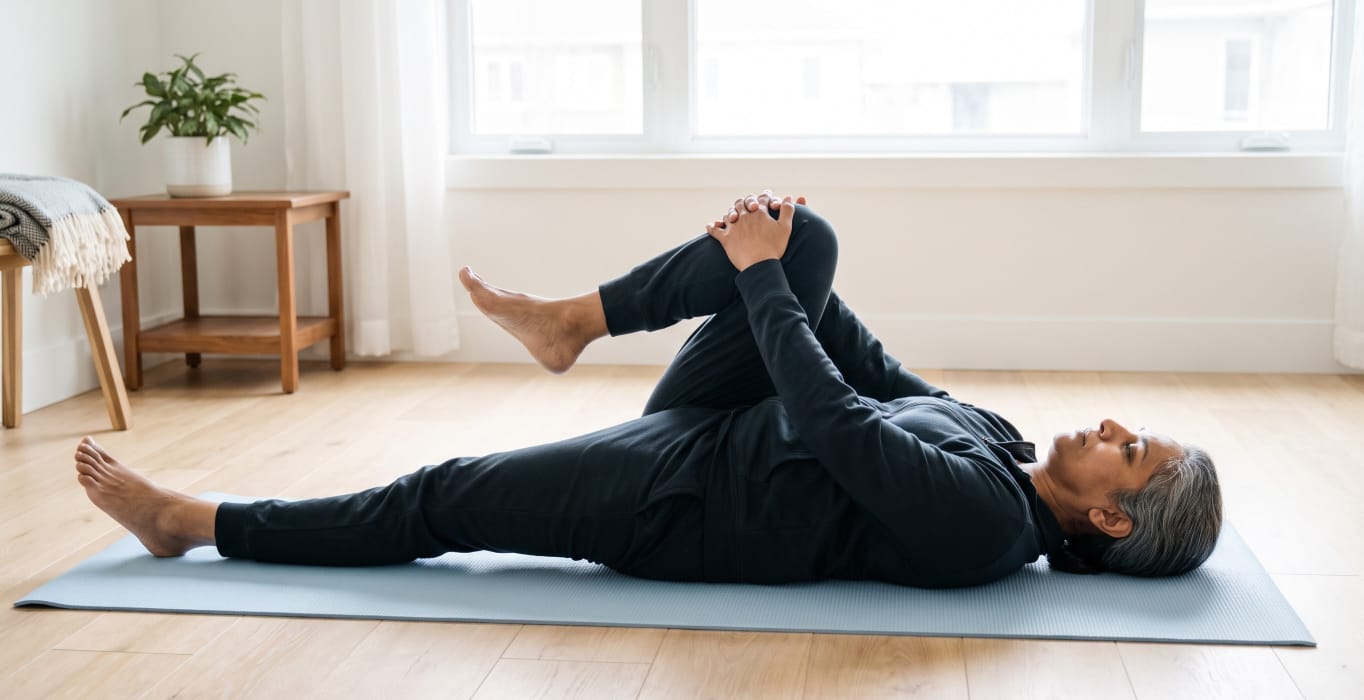
Knee to chest: a gentle starting point
Lie on your back and bring one knee toward your chest, holding behind the thigh or over the shin until you feel a gentle stretch, then lower the leg and switch sides. It is one of the four exercises covered later in this guide.
What sciatica feels like
The NHS describes sharp or burning pain down the back of the leg, often with tingling, numbness or weakness. It usually affects the buttock and one leg, sometimes the foot and toes, and may be worse with movement, sneezing or coughing. Back pain can occur too, but it is usually milder than the leg pain.
Red flags: when not to exercise and get urgent help
The NHS says these signs can point to a serious back problem that needs prompt hospital treatment:
- Sciatica on both sides
- Severe or worsening weakness or numbness in both legs
- Numbness around the genitals or bottom
- Difficulty starting to pass urine, being unable to pass urine, or losing control of urination, if this is not normal for you
- Not noticing the urge to open your bowels, or losing control of bowel movements, if this is not normal for you
Do not drive yourself. Ask someone to take you or call an ambulance. The NHS also advises seeing a doctor if sciatica has not improved after a few weeks of home treatment, is getting worse or is stopping you doing normal activities.
Should you rest or keep moving?
The NHS says to start gentle exercise as soon as you can and to avoid sitting or lying down for long periods. It notes that moving may hurt but is not harmful and can help you get better faster. Cleveland Clinic agrees that a short rest in the first day or two can help, but too much rest may worsen pain and slow recovery.
The NHS page on sciatica exercises adds a firm safety rule: stop the exercise immediately if you feel any pain or become unwell. Because these statements pull in slightly different directions, a sensible reading is that mild stretching sensations are expected, but sharp pain or worse leg symptoms mean stop and ask a physiotherapist. That reading is a general suggestion, not a quote from either source.
Four sciatica exercises to try
Cleveland Clinic describes these four. It advises having a therapist show you how to do them safely, moving slowly, breathing normally and not pushing through back pain.
| Exercise | How to do it |
|---|---|
| Bridging | Lie on your back with knees bent and feet flat, about hip-width apart. Tighten your belly and buttock muscles, lift your hips into a straight line, hold briefly, then lower slowly |
| Cat-camel | On hands and knees, round your back upward, then let your belly drop and lift your chest and tailbone. Move slowly and breathe between positions |
| Knee to chest | Lie on your back and bring one knee toward your chest, holding behind the thigh or over the shin until you feel a gentle stretch. Lower the leg, then switch sides |
| Lower back extension | Lie face down with hands under your shoulders. Keep your hips relaxed on the floor and gently press up to lift your chest, slightly arching your lower back, then lower slowly |
The sources do not give repetitions for these four. Start with a few slow repetitions and ask your physiotherapist how many to build up to.
What to avoid
- Hamstring stretches during a flare: Versus Arthritis says the standing hamstring stretch is not suitable for acute sciatica, because it may worsen nerve pain.
- Long periods of sitting or lying down: the NHS advises against both.
- Pushing through pain: Cleveland Clinic says low-impact activity such as walking, swimming or yoga may be a better choice when exercises hurt.
How long does sciatica last?
The NHS says sciatica usually improves within a few weeks to a few months, though it can last longer and may come back. Cleveland Clinic says many cases improve within four to six weeks, with or without medical treatment, and that most people recover without long-term problems.
Where physiotherapy fits in
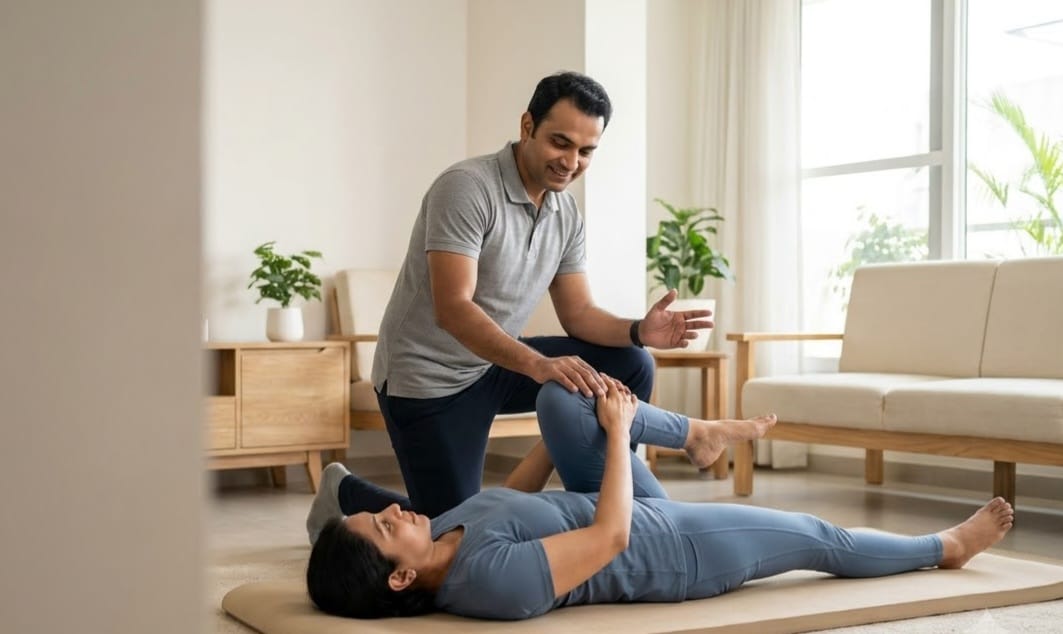
Both the NHS and Cleveland Clinic list physiotherapy among the main treatments. It can include exercise advice and manual therapy such as massage, and therapists teach exercises for clinic and home use. Cleveland Clinic says it is typically recommended when self-care is not enough.
If you would rather have a physiotherapist see you at home, Senocare's page on physiotherapy for lumbar spondylosis is a useful starting point, and the physiotherapy at home page explains how home visits work in Delhi NCR.
This article is general education and not a substitute for advice from a doctor or physiotherapist.
Book a Physiotherapist at Home →Frequently Asked Questions
The NHS advises keeping up normal activities as much as you can and starting gentle movement early. Cleveland Clinic also lists walking as a low-impact option.
Yes. The NHS says it may return. It suggests staying active, lifting heavy objects safely, keeping good posture, setting up your computer correctly, managing your weight and avoiding smoking.
The NHS suggests heat packs on the painful area. Paracetamol is unlikely to help, according to the NHS, and the benefit of anti-inflammatory painkillers is unclear, so ask a pharmacist.