Slip Disc Treatment Without Surgery: What Usually Helps
Hearing that you have a slipped disc can be frightening, and surgery is often the first fear. The reassuring fact is that most people improve without it. This guide explains slip disc treatment without surgery: how recovery usually goes, what self-care and physiotherapy involve, and the signs that mean you need urgent care. Doctors also call this a herniated or prolapsed disc. The advice draws on the NHS and the American Academy of Orthopaedic Surgeons (AAOS).
What a slipped disc is
The NHS describes a slipped disc as a soft cushion of tissue between the spinal bones that bulges outward. It hurts when it presses on nerves. Many people never realise they have one. Symptoms can include back or neck pain, numbness or tingling in the arms, hands, legs or feet, difficulty bending or straightening the back, muscle weakness, and pain in the buttocks, hips or legs if the sciatic nerve is affected.
Do most slipped discs get better without surgery?
Yes, according to both sources. AAOS says most people feel better within a few weeks or months without surgery, and only a small percentage with a lower back disc herniation need an operation. It adds that the herniation may dissolve naturally over time. Symptoms typically improve over several days to weeks, and most people are symptom free by about 3 to 4 months, though some have flare-ups along the way. The NHS says recovery is gradual and usually comes with rest, gentle exercise and painkillers, and gives no fixed timeframe.
Self-care in the first weeks
- Brief rest only: AAOS suggests about 1 to 2 days of rest, then gradually resuming activity while avoiding painful movements. The NHS says to rest only if pain is severe at first, then build up gentle activity. Any activity is fine if it does not cause or worsen pain.
- Anti-inflammatory painkillers: AAOS names ibuprofen and naproxen. The NHS suggests taking them regularly within the daily limit to help you keep moving, but they are not suitable for everyone, so ask a pharmacist first.
- Stronger pain relief: the NHS says codeine should be used only for a few days because of the risk of addiction. Ask a pharmacist or doctor.
- Keep walking: the NHS gives walking, swimming and yoga as examples of activity. AAOS says a doctor or therapist may recommend a simple daily walking programme, such as 30 minutes.
Where physiotherapy fits
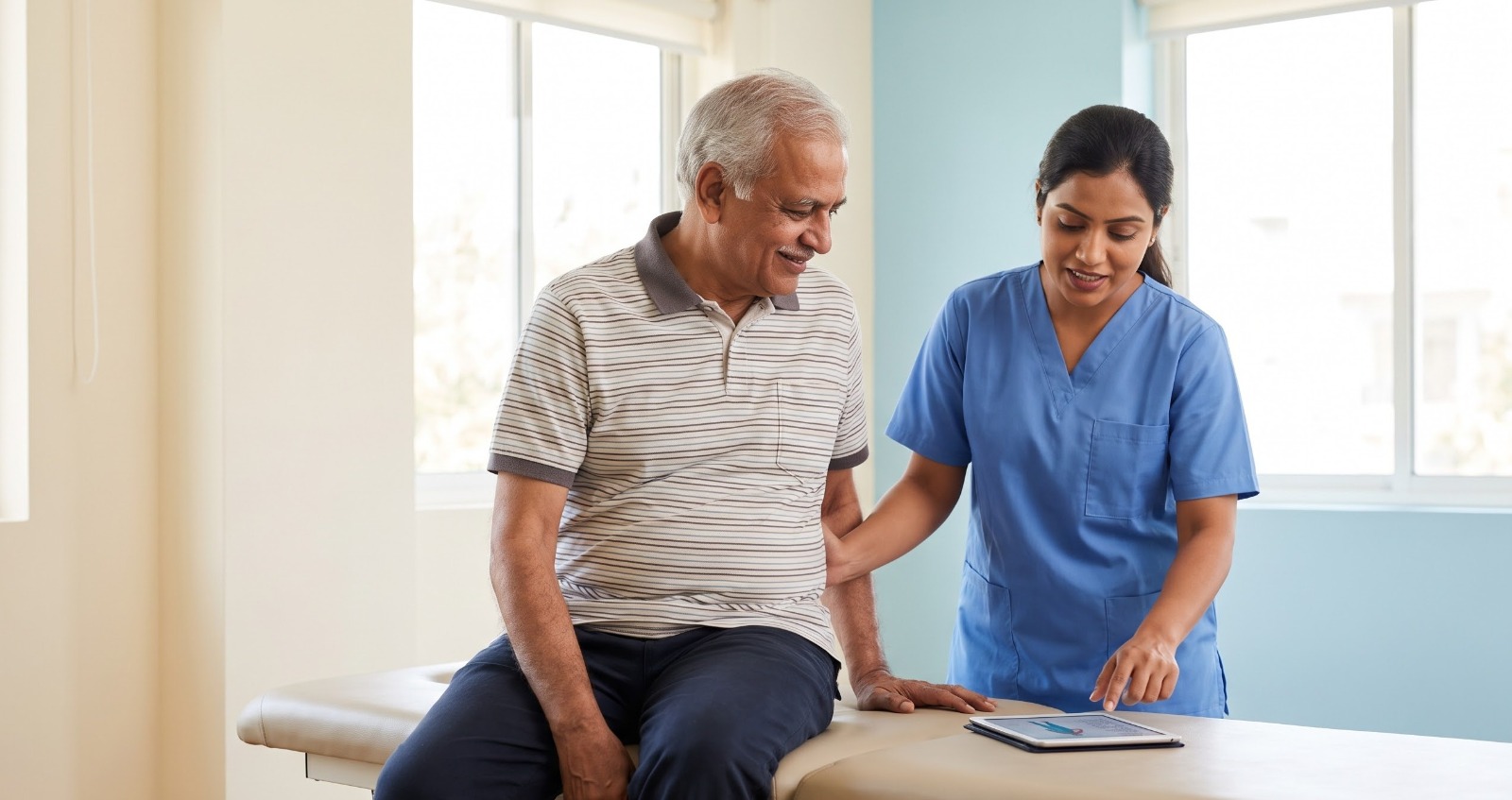
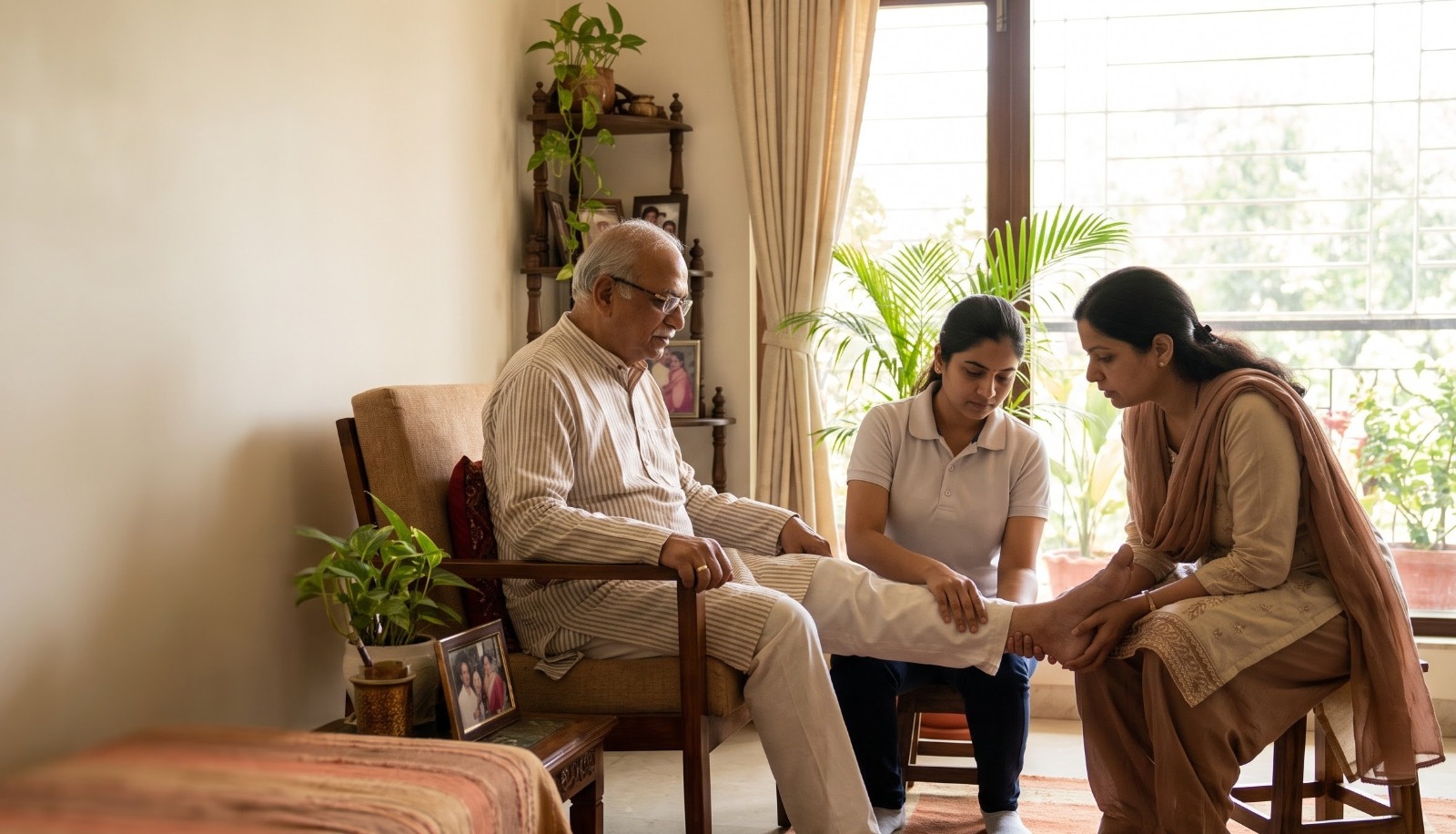
AAOS says targeted exercises strengthen the lower back and abdominal muscles. The NHS says physiotherapy may be recommended, and notes that in many UK areas you can refer yourself to community musculoskeletal services. A physiotherapist can assess which movements calm your symptoms, set a graded exercise plan and show you safer ways to lift and sit.
Senocare's pages on back pain treatment at home and physiotherapy at home explain how home visits work in Delhi NCR.
If symptoms do not improve
The NHS says to see a doctor if pain is not improving after a few weeks. It lists short-term options such as stronger painkillers, a steroid injection or a muscle relaxant, and a scan such as an MRI if symptoms persist. AAOS says epidural steroid injections may give short-term relief for people not helped by 6 weeks or more of other care, and that these treatments relieve symptoms but do not heal the disc itself. The NHS notes that manual therapies such as osteopathy may ease lower back pain, usually at your own cost.
When surgery is considered
The NHS says surgery is not usually needed. A doctor may refer you to a specialist if symptoms do not improve with other treatments, or if muscle weakness or numbness is getting worse. AAOS says surgery is generally recommended when symptoms persist after a period of non-surgical treatment, or sooner for muscle weakness, difficulty walking or loss of bladder or bowel control.
Red flags: get urgent help
The NHS says to get emergency care if back pain comes with:
- Numbness around the bottom or genitals
- Being unable to pass urine
- Loss of feeling in one or both legs
- Loss of control over urination or bowel movements
- Onset after a serious accident
AAOS says loss of bladder or bowel control may signal cauda equina syndrome, which it describes as a medical emergency. Do not drive yourself. Ask someone to take you. The NHS also advises seeing a doctor if back pain comes with a very high temperature, unexplained weight loss, swelling in the back or pain that is worse at night. The NHS quotes UK emergency numbers. In India, use your local emergency number or go to the nearest hospital.
Preventing a repeat
The NHS suggests staying active and exercising regularly, lifting heavy objects with safe technique and not smoking, because nicotine weakens disc tissue. AAOS notes there is up to a 20 to 25 percent chance of a disc herniating again over a lifetime, whichever treatment is used. This article is general education and not a substitute for advice from a doctor or physiotherapist.
Book a Physiotherapist at Home →Frequently Asked Questions
AAOS says the herniation may dissolve naturally over time, and that most people improve within a few weeks or months without surgery.
Only briefly. AAOS suggests about 1 to 2 days, and the NHS says to rest only if the pain is severe at first, then gradually resume gentle activity.
Yes. AAOS says there is up to a 20 to 25 percent chance of the disc herniating again during a lifetime, with either surgical or non-surgical treatment.