Visa for Elderly Parents: How to Apply When You Live Abroad
Published on:
You’ve found a spare room, picked dates around the festivals, and promised your mother she’ll finally see the grandchildren’s school play. Then you open the visa page and your heart sinks. Forms, fees, appointment slots, insurance quotes, an interview for a 74-year-old who has never been to a consulate in her life.
It’s a lot. But a visa for elderly parents is very doable when you start early and treat it as a family project, not a last-minute chore. This guide is written for you, the son or daughter abroad, and for parents who are reading over your shoulder.
Quick answer
- Start 3 to 6 months before the travel date. Rules, fees and slots change, so confirm everything on the official government site before you pay.
- Most countries want the same story told clearly: who is inviting, who is paying, why your parents will go home, and how any medical bills will be covered.
- Older applicants usually can’t count on an interview waiver. The US page we checked, for instance, lists applicants over 79 among those who need an interview.
- Canada’s Super Visa and Schengen visas have specific insurance requirements. Don’t buy a policy until you’ve read them.
- Nobody can promise an approval. A tidy, honest, well-organised file simply gives your parents the best chance.
Start here: what visa officers are really asking
Whatever the country, officers are quietly asking four questions.
- Is the visit genuine? A clear reason, a sensible length, a real itinerary.
- Will they go back? Proof that your parents’ life is in India.
- Who’s paying? Money for the trip, and for any medical need.
- Is there any risk? Previous refusals, overstays, unexplained gaps, or health costs falling on the host country.
Your parents are often strong applicants on question two, because they own a home, draw a pension and have a whole life in India. The trouble is rarely the facts. It’s that the facts aren’t on paper.
Country by country: the short version
Each country has its own form and website. Here’s how they compare, based on the official pages we checked in November 2026.
| Country | Visa | What we confirmed | Check on the official site |
|---|---|---|---|
| USA | B1/B2 visitor visa | Interview generally needed for nearly all applicants, including those over 79. Waiver only for limited renewals, applied for in your country of nationality or residence. | Current fee, any additional fees, appointment wait times |
| UK | Standard Visitor | £135 for up to 6 months. Longer options exist (£506 for 2 years, £903 for 5, £1,128 for 10). Decision usually within 3 weeks. Apply up to 3 months before travel. | Fee changes, application centre in India |
| Canada | Super Visa (parents and grandparents) | Valid for up to 10 years, with stays of up to 5 years per entry at the officer’s discretion. Needs host income threshold, invitation letter, medical exam and Canadian insurance. | Income figure, fees, processing time |
| Canada | Regular visitor visa | $100 processing plus $85 biometrics per person, if eligible. Can be valid up to 10 years. | Whether Super Visa is the better fit |
| Schengen | Short-stay visa | Insurance of at least EUR 30,000 for one or two entries. Normally decided within 15 days, up to 45 in some cases. Apply up to 6 months ahead. | Visa fee, consulate-specific document list |
| Australia | Visitor (subclass 600) | Sponsored Family stream exists for relatives sponsored by someone in Australia. | Everything else: fee, stay length, health requirements, sponsor rules |
United States: B1/B2
The US is where parents most often feel nervous, because of the interview. Here’s what we found: the State Department’s interview waiver update (effective 1 October 2025) says nearly all applicants need an in-person interview, including those under 14 and over 79. A limited waiver exists for renewing a B visa within 12 months of the previous one expiring, if that visa was issued for full validity and the applicant was at least 18, plus other conditions such as having never been refused. Officers can still call anyone in.
So if your father had a ten-year visa that lapsed last year, he may qualify to renew without an interview. If it’s a first application, plan for an interview and prepare for it (more below).
Fees and wait times change often. Check the fee page and the appointment-wait tool on travel.state.gov. Also look out for any additional fee charged on issuance, as the rules have been shifting.
UK: Standard Visitor
Applications are made online, then your parent attends a visa application centre for fingerprints and a photo, and you submit documents there. The passport comes back the same day. UK government guidance says each applicant needs their own application, fee and appointment, and that you can apply up to three months before travel. If a parent will be visiting for medical treatment, that’s a different route (£234, up to 11 months), so read that page carefully.
A TB test certificate is needed for stays over 6 months, so check before choosing a long stay.
Canada: Super Visa or visitor visa
If your parents want to stay for months rather than weeks, the Super Visa is built for that. From the IRCC pages:
- You, the host child or grandchild, must be a citizen, permanent resident or registered Indian, meet the minimum necessary income, and write a signed invitation letter.
- Your parents need private health insurance valid at least one year from entry, with at least $100,000 emergency coverage including health care, hospitalisation and repatriation. It must come from a Canadian insurer or an approved foreign insurer. Quotes aren’t accepted.
- They need an immigration medical exam with a panel physician. IRCC advises having it done before applying. Results are valid for 12 months.
The invitation letter must also list everyone in your household with their names and dates of birth. A spouse who is a citizen or permanent resident can co-sign. Siblings can’t.
For a shorter visit, the regular visitor visa may be simpler. Tourists are generally asked for an invitation letter, proof of relationship, an itinerary and a bank statement covering at least six months.
Schengen (France, Germany, Italy and others)
Apply to the country where your parents will spend the most nights, or enter first if the stay is split equally. Document lists vary by consulate, so use that country’s embassy or its official service provider. The common baseline is travel medical insurance valid across the whole Schengen area for the entire stay, with cover of at least EUR 30,000. Confirm the current visa fee, because it has changed in recent years.
Australia: Visitor visa
Australia’s Sponsored Family stream is for relatives sponsored by someone in Australia. We couldn’t confirm the fee, stay length, health requirements or sponsor conditions from official pages, so please read the Home Affairs page for your exact stream before planning around it.
The invitation or sponsor letter
Even where it isn’t mandatory, a good letter helps. Keep it factual and short.
- Your full name, address, immigration status in the host country, and contact details
- Your parents’ full names, dates of birth and passport numbers
- Your relationship to them
- Purpose, dates and length of visit
- Where they’ll stay, and who covers food, local travel and medical costs
- A line confirming they’ll return to India, with the return flight date if booked
Attach copies of your passport or residence card, a proof of address, recent payslips or tax documents, and proof of relationship such as your birth certificate naming them. For Canada, follow IRCC’s exact list.
Proof of ties to India and finances
This is where most files are won or lost. Think of it as showing that your parents’ lives are anchored here.
- Property papers, or a rental agreement if they rent
- Pension statements, FD receipts, or income tax returns
- Bank statements. Canada’s visitor guidance mentions six months. UK guidance doesn’t set a period but says old statements are less useful. Explain large or unusual deposits in a short note.
- A spouse, a sibling or other family members staying behind
- Previous passports showing genuine past travel
- Evidence of ongoing commitments: medical care, a society role, a family business
If you’re paying for the trip, include your own bank statements and a sponsor letter. The UK guidance asks you to show what support is being provided and your relationship. A balanced file shows your parents’ own means alongside your support, not only the latter.
For the full paperwork list that isn’t visa-specific, such as medicines and copies of ID, our broader guide on travelling with parents already covers it, so we won’t repeat it here.
Document checklist
| Document | Who provides it | Notes |
|---|---|---|
| Passports (valid, with spare pages) | Parents | Canada asks for validity of at least 6 months from travel; others vary |
| Application form and fee receipt | Parents, helped by you | Fill carefully. Names must match passports exactly |
| Invitation or sponsor letter | You | Signed and dated |
| Your status proof (passport, PR card, citizenship) | You | Clear copies |
| Proof of relationship | You and parents | Birth certificates, translated if needed |
| Bank statements, ITR, pension proof | Parents | Explain unusual deposits |
| Property or family ties documents | Parents | Shows reasons to return |
| Travel medical insurance | You or parents | Check minimums for the destination |
| Itinerary and return ticket plan | You | Don’t over-commit before approval |
| Medical exam proof (Super Visa) | Parents | Panel physician only |
| Translations | Either | Follow the consulate’s translation rules |
If the forms feel like a maze, our form-filing support is there to help you get the details right first time.
Travel medical insurance for older parents
Insurance is where many applications for older parents wobble. A few practical points.
- Read the minimums first. Schengen asks for at least EUR 30,000. The Super Visa has its own $100,000 rule and strict insurer conditions.
- Disclose conditions honestly. Pre-existing conditions are often excluded or limited, particularly in older age bands. Ask the insurer exactly what’s covered before you pay, and keep the policy wording.
- Don’t confuse a quote with a policy. IRCC says quotes aren’t accepted for the Super Visa.
- Check renewal and repatriation for long stays.
We can’t recommend a specific insurer or product here. For US and UK visits there isn’t a visa-level insurance mandate we confirmed, but a hospital stay abroad can run into serious money, so most families buy cover anyway.
Health and fitness to fly
Don’t treat this as an afterthought, especially for parents with diabetes, heart conditions or mobility limits.
- Book a check-up with your parents’ regular doctor a few weeks before travel. Ask plainly: are they fit for a long-haul flight?
- Carry a doctor’s letter listing conditions and medicines, in English.
- Plan the journey: aisle seats, wheelchair assistance, and gaps between connecting flights that aren’t punishing.
- Start gentle strength and balance work early. Our guide to fall prevention exercises is a good place to begin, and the notes on looking after parents at home help with the weeks before departure.
Remember that some visas, such as the Super Visa, need a formal immigration medical exam, which is separate from a fitness-to-fly check-up.
Interview and biometrics prep for older applicants
Many seniors freeze at the interview window. A few quiet rehearsals at home make a big difference.
- Practise the basics. Why are you going? How long? Where will you stay? Who is paying? Who is staying in India?
- Short, truthful answers. Officers prefer two clear sentences to a long story.
- Carry only what’s needed, organised in one folder in the order of the checklist. Officers rarely read everything.
- Plan the day. Early arrival, a seat, water, a snack, and any medicines. Consular queues can be long.
- Hearing and mobility. If your parent is hard of hearing or can’t stand for long, tell the centre’s staff at the door. Ask the consulate in advance about accessible arrangements.
- No coaching on what to say. Consistency comes from knowing your own life, not from memorised lines.
Imagine a 78-year-old father who walks in with a thick folder, loses his place, and hands over the wrong paper. Now imagine the same father with a slim folder, a printed one-page summary, and a calm daughter who has walked him through the questions twice. The second father usually has a much easier day.
Common refusal reasons and how to avoid them
| Reason | What it often looks like | How to avoid it |
|---|---|---|
| Weak ties to India | Few documents, unclear plans to return | Show property, pension, family at home |
| Unclear funds | Large unexplained deposits, no sponsor details | Add a short explanation and sponsor documents |
| Inconsistent answers | Form, letter and interview don’t match | Review every document for matching dates and names |
| Incomplete forms | Missing pages, mismatched names | Check names against the passport line by line |
| Past refusals not disclosed | Leaving a question blank | Answer every question truthfully |
| Medical or insurance gaps | Wrong cover, missing exam | Read the destination’s rules before buying |
| Too-long or vague trip | No end date or itinerary | Choose a sensible length with a clear reason |
Refusals are rarely personal. Often they come from a file that didn’t tell the story clearly. If one happens, read the reason, don’t rush into a second application, and check what has to change first.
Timelines to plan around
| Stage | Typical window | Notes |
|---|---|---|
| Decide destination and dates | 6 to 8 months before travel | Schengen and UK have limits on how early you can apply |
| Gather documents | 4 to 8 weeks | Bank statements and certificates take longest |
| Insurance and medical exam | After you’ve confirmed rules | Super Visa exam results are valid for 12 months |
| Application and biometrics | 1 to 3 weeks | Book the appointment as early as possible |
| Decision | UK usually up to 3 weeks; Schengen normally 15 days, up to 45; US and Canada vary | Check the live processing tools |
| Flights and hotels | After approval, where possible | Prefer refundable fares |
Start earlier than you think you need to. A US appointment wait can be long, and a missed slot can push your whole plan back.
How a Senocare CareManager can help
You’re thousands of kilometres away. Your parents are in Gurgaon or elsewhere in Delhi NCR, and they shouldn’t have to manage this alone. Our travel and tours service is built for this gap.
A CareManager can:
- Help your parents gather and organise documents, and flag anything missing
- Support passport services and visa assistance
- Book appointments and help with forms
- Accompany your parents to biometrics or the interview centre, where the consulate permits
- Arrange the India side of the journey: air, train and hotel bookings, forex, car rental, a driver on call, and travel insurance
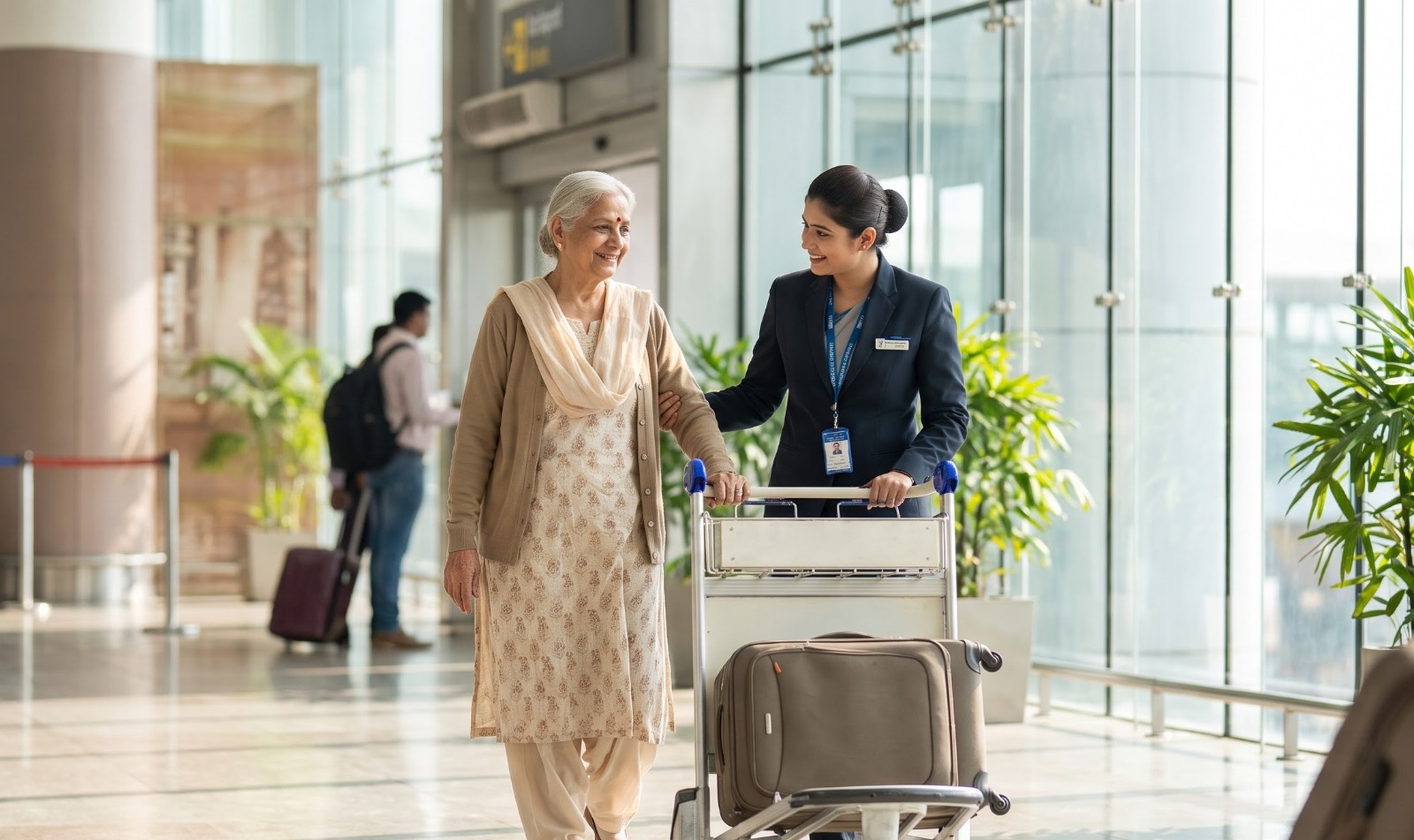
- Offer escorted travel options, so your parents aren’t alone at the airport
If you want a longer-term arrangement, have a look at our care packages. To discuss a specific trip, get in touch with our team.
We don’t decide visas and we can’t promise outcomes. What we can do is make the process calmer and the file clearer.
FAQs
Usually, yes. The State Department’s current interview waiver update lists applicants over 79 among those who need an interview. A narrow renewal waiver exists for some people with a recent full-validity visa. Eligibility depends on your parent’s history, so check the official page before assuming.
For longer stays, often yes. The Super Visa can allow stays of up to 5 years per entry, while the regular visitor visa suits shorter trips. The Super Visa adds requirements: your income, the invitation letter, a medical exam and one year of Canadian insurance with $100,000 coverage.
No official page we checked gave one magic number. Officers look at whether funds fit the length and cost of the trip, and where the money came from. Add your own sponsor documents if you’re paying. Check each country’s requirements instead of trusting a figure from a forum.
You can usually help with forms, and in some countries a family member or representative may submit them. But parents typically still attend biometrics or interviews themselves, and the declaration is theirs. Never sign or answer anything you can’t stand behind. If you use a representative, follow the official process.
Be honest on forms and with insurers. Get a doctor’s letter, check what the policy excludes, and consider whether the trip length suits their health. Some visas require a formal medical exam. A condition doesn’t automatically mean refusal, but a gap in insurance can cause trouble.
For most families, three to six months before travel. The UK allows applications up to three months ahead, and Schengen up to six. For the US, check current appointment waits first, because they can set the pace for everything else.
Ready to bring your parents over?
You handle the invitation and the finances. We’ll look after the paperwork support, the appointments and the journey on the India side. Explore our travel and tours service or write to us to talk through your parents’ visa plans.