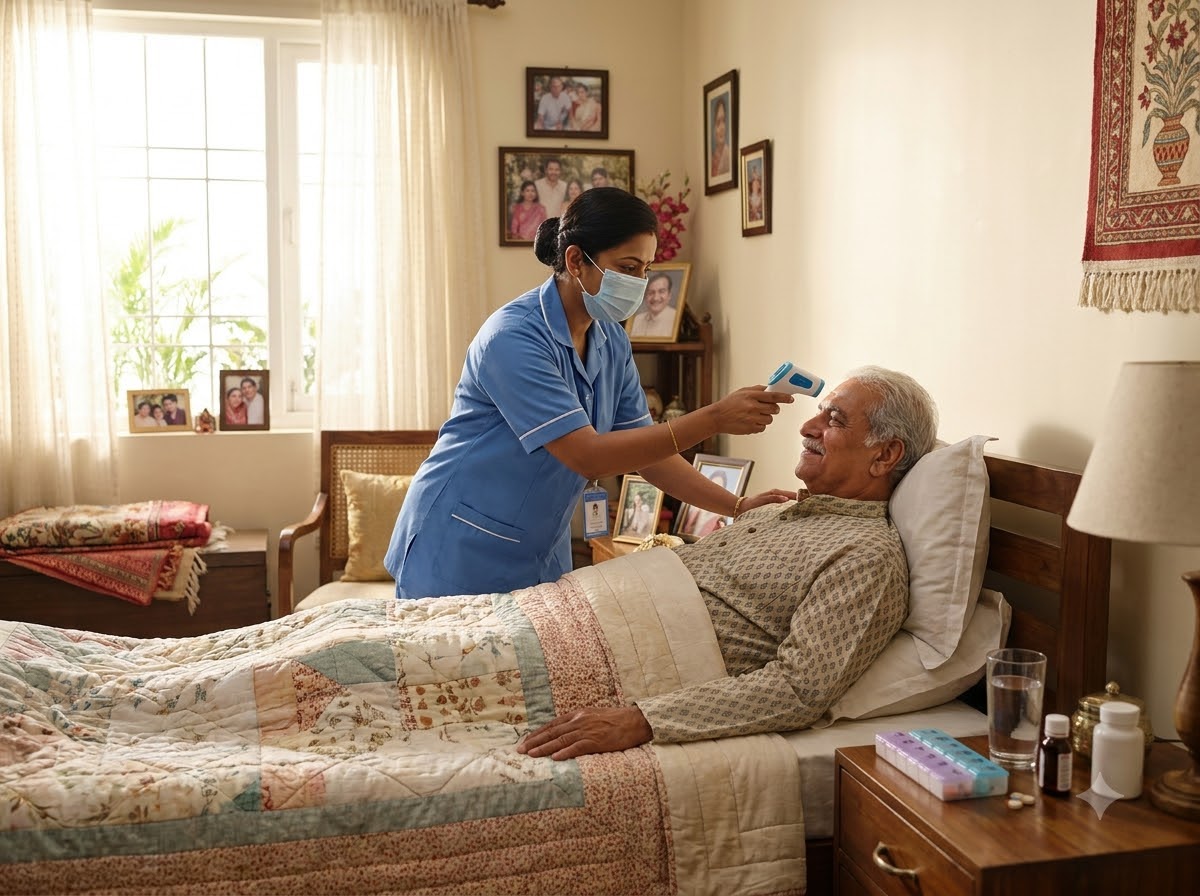
Nursing Care Plan for Fever: Assessment, Interventions & Home Care
Content is medically reviewed by:
Understanding Fever and the Need for Proper Nursing Care
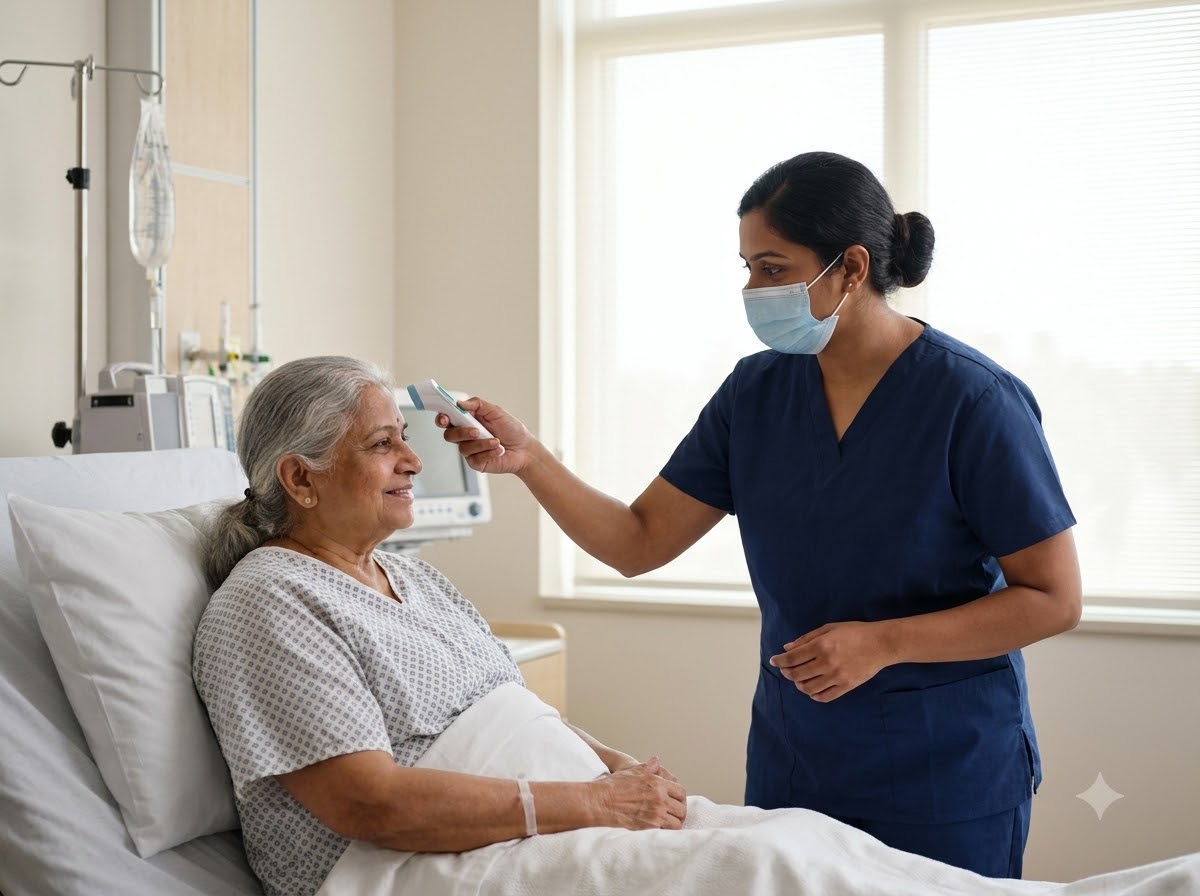
A sudden spike in temperature is unsettling, especially when it happens to an elderly parent or a family member recovering at home. Fever itself is rarely the real problem; it is usually the body's way of signalling that something else needs attention, whether that is an infection, an inflammatory condition, or a reaction to medication.
For elderly people and patients recovering after surgery or illness, keeping an eye on fever and the symptoms that come with it can make a real difference to recovery. A structured nursing care plan looks beyond the thermometer reading. It covers hydration, vital signs, comfort, medication adherence, and the warning signs that tell a caregiver when it is time to call a doctor.
This article walks through what fever is, how nurses assess and manage it, and what family caregivers can do at home, along with guidance on when professional nursing support becomes useful.
What Is Fever?
Fever, or pyrexia, is a temporary rise in body temperature above the normal range. A typical adult oral temperature sits around 98.6°F (37°C), and most healthcare providers consider a reading of 100.4°F (38°C) or higher to be a fever. It happens when the hypothalamus, the brain's temperature-control centre, resets the body's temperature set point in response to infection or inflammation.
What Causes Fever?
Fever can result from a wide range of conditions:
- Viral infections such as the flu or common cold viruses
- Bacterial infections including urinary tract infections and pneumonia
- Other infections, such as skin or gastrointestinal infections
- Inflammatory conditions, for example rheumatoid arthritis
- Medication-related causes, including reactions to certain antibiotics or vaccines
- Other underlying medical conditions, including some cancers and autoimmune disorders
Common Symptoms Associated With Fever
| Symptom | What It Looks Like |
|---|---|
| Elevated temperature | Above the patient's normal baseline |
| Chills and shivering | Often occur as temperature rises |
| Sweating | Common as the body tries to cool down |
| Weakness and fatigue | Reduced energy and drowsiness |
| Headache | Mild to moderate in most cases |
| Body aches | General muscle discomfort |
| Reduced appetite | Common during acute illness |
| Dehydration | From sweating, poor intake or vomiting |
This overview is intentionally brief. Since fever is a symptom rather than a diagnosis, the real value for caregivers and nursing students lies in what comes next: how to assess it, plan for it, and manage it safely.
Why Nursing Care Is Important During Fever
Fever on its own is usually manageable, but it can escalate quickly in certain patients, particularly the elderly, those recovering from surgery, or people with existing health conditions. Structured nursing support brings a level of consistency that is hard to maintain otherwise.
Nursing care during a febrile episode typically involves:
- Regular temperature and vital-sign monitoring to track trends, not just single readings
- Medication management as prescribed by the treating doctor
- Hydration monitoring to catch early signs of fluid loss
- Patient comfort measures, including positioning and environment control
- Supporting adequate rest and recovery
- Watching for changes in symptoms that might indicate a complication
- Extra support for elderly or dependent patients who cannot always communicate how they feel
- Recognising early when medical attention is required, rather than waiting for symptoms to worsen
This is where professional home nursing becomes relevant. Services such as vital monitoring, medication administration, wound management, post-operative care, and elderly care all connect back to the same core skill: watching a patient closely enough to catch problems early, which is exactly what fever management calls for.
Nursing Assessment for Fever
A proper assessment is the foundation of any nursing care plan for fever. It is not just about recording a number; it is about understanding what that number means for this particular patient.
Monitor Body Temperature
- Record temperature at regular intervals, not just once
- Note the trend over hours or days, since a rising trend matters more than a single reading
- Use a measurement method appropriate for the patient (oral, axillary, tympanic, or rectal, depending on age and condition)
Monitor Vital Signs
Along with temperature, nurses typically track:
- Pulse rate
- Blood pressure
- Respiratory rate
- Oxygen saturation, when clinically appropriate
Assess the Patient's Symptoms
A careful nurse looks out for:
- Chills or shivering
- Excessive sweating
- Weakness
- Headache
- Body aches
- Cough or breathing difficulty
- Vomiting or diarrhoea
- Any change in consciousness or alertness
Assess Hydration
Fever increases fluid loss through sweating, so hydration status needs close attention. Key things to check include fluid intake, urine output, dry mouth, and excessive sweating. Other signs of dehydration include dizziness, dark-coloured urine, and skin that is slow to bounce back after a gentle pinch.
Identify the Possible Underlying Cause
Fever is a symptom, not a diagnosis. Part of the nursing assessment involves watching for clues, such as a cough pointing to a respiratory infection or urinary symptoms pointing to a UTI, that may help identify what is driving the fever, so the right treatment can follow.
Nursing Diagnosis for Fever
These are common nursing diagnoses associated with fever. They are not universal; the appropriate diagnosis depends on each patient's individual assessment.
Hyperthermia
Associated with an underlying illness or infection that has raised the body's core temperature above normal.
Risk of Deficient Fluid Volume
Particularly relevant when fever is accompanied by heavy sweating, vomiting, diarrhoea, or reduced fluid intake.
Acute Pain
Applies when fever comes with headache, body aches, or another painful condition.
Activity Intolerance
Relevant when weakness or fatigue limits the patient's ability to carry out normal activities.
Important: A nursing diagnosis should always be based on the individual patient's assessment and clinical condition, not applied as a one-size-fits-all label.
Nursing Care Plan for Fever
| Nursing Assessment | Nursing Diagnosis | Goal | Nursing Intervention | Expected Outcome |
|---|---|---|---|---|
| Elevated temperature | Hyperthermia | Temperature moves toward the desired range | Monitor temperature and vital signs; provide appropriate comfort measures | Temperature and vital signs improve |
| Poor fluid intake / fluid loss | Risk of deficient fluid volume | Maintain adequate hydration | Monitor intake/output and encourage fluids when appropriate | Hydration is maintained |
| Weakness and fatigue | Activity intolerance | Improve comfort and energy | Encourage adequate rest and assist with activities | Patient tolerates appropriate activity |
| Pain/body aches | Acute pain | Reduce discomfort | Assess pain and administer prescribed treatment | Patient reports improved comfort |
| Signs suggesting infection | Underlying condition requiring assessment | Identify and manage cause | Monitor symptoms and follow prescribed investigations/treatment | Underlying condition is appropriately evaluated |
This table is meant as a practical reference, useful whether you are a caregiver trying to understand what a nurse is doing, or a nursing student organising a care plan.
Nursing Interventions for Fever
Regular Temperature and Vital Monitoring
What gets monitored matters less than how consistently it happens. Temperature, pulse, blood pressure, respiratory rate, and oxygen saturation should all be tracked at intervals suited to the patient's condition. A single high reading is far less useful than a trend line, since trends tell you whether the current care plan is working or needs adjustment. Monitoring frequency should follow the treating doctor's advice and the severity of the patient's condition.
Maintaining Hydration
- Encourage appropriate fluids when medically suitable
- Monitor fluid intake and urine output
- Watch for early signs of dehydration
- Follow prescribed IV-fluid therapy when applicable and ordered by a physician
Providing Comfort
- Maintain a comfortable room environment
- Adjust clothing and bedding as needed
- Encourage adequate rest
- Use appropriate cooling measures when indicated by the care team
- Avoid measures that trigger excessive shivering, since shivering can actually raise core temperature further
Medication Administration
A nurse's role around medication during fever includes administering prescribed medicines on schedule, monitoring how the patient responds, watching for any adverse effects, and making sure medications are taken exactly as advised by the treating doctor. This article does not recommend specific medicines or dosages; those decisions should always come from the treating physician.
Monitoring for Changes in Condition
Nurses stay alert for signs that a patient's condition may be worsening, including:
- Fever that keeps climbing despite treatment
- Increasing weakness
- Breathing difficulties
- Confusion or altered alertness
- Reduced urine output
- Persistent vomiting
- Any other change that feels out of the ordinary for that patient
Fever Care at Home: What Family Caregivers Should Know
Managing fever at home is very common, and family caregivers play a big role in how smoothly recovery goes.
Keep a Record
A simple daily log helps track progress and gives useful information if a doctor needs to be consulted. Note down:
- Temperature readings and times
- Medication given, with time and dose as prescribed
- Fluid intake
- Symptoms observed
- Any other relevant changes
Encourage Appropriate Rest and Fluids Rest reduces strain on the body while it fights off infection, and steady fluid intake helps prevent dehydration.
Follow the Doctor's Treatment Plan Stick to the prescribed medication schedule and any specific instructions given for the patient's condition.
Monitor the Patient Regularly Check in at set intervals rather than only when something seems wrong, since early changes are often subtle.
Don't Ignore Changes in Symptoms A symptom that seems minor on day one can matter a lot more if it persists or worsens by day three. When in doubt, it is safer to check with a doctor.
Fever in Elderly Patients: Why Extra Monitoring May Be Needed
Fever behaves differently in older adults, which is one reason Senocare places such strong emphasis on elder care. A few things caregivers should keep in mind:
- Older adults may not show the typical signs of fever, such as chills or flushed skin, and may instead show confusion, fatigue, or reduced appetite
- Since elderly people often run a lower baseline temperature, even a modest rise can signal a real problem
- Existing conditions like diabetes or heart disease can complicate how fever is managed
- Older adults are more prone to dehydration and may not feel thirsty even when they need fluids
- Medication schedules require careful tracking, since missed or delayed doses can affect recovery
- Changes in alertness, mobility, or appetite are often the earliest clue that something is wrong, sometimes before temperature rises noticeably
Senocare's elder-care approach combines medical and non-medical support, including nursing, ICU-level care at home, and doctor visit coordination, which is particularly useful for managing fever episodes that need closer observation than a family alone can provide.
When Does Fever Require Medical Attention?
Fever itself is rarely an emergency, but certain warning signs mean it is time to seek medical attention without delay:
- Difficulty breathing
- Confusion or a significant change in alertness
- Severe dehydration
- Seizures
- Severe headache or a stiff neck
- Persistent vomiting
- Rapid deterioration in overall condition
- Fever that persists or keeps worsening despite treatment
- Any concerning symptom in elderly or medically vulnerable patients
Temperature alone does not tell the whole story. A temperature of 103°F (39.4°C) or higher generally warrants a call to the doctor, but the patient's age, existing health conditions, how long the fever has lasted, and what other symptoms are present all matter just as much as the number on the thermometer.
When Can a Home Nurse Help With Fever Care?
Not every fever needs a hospital visit, but some situations call for more support than a family can reasonably provide on their own. A home nurse can be particularly helpful when a patient needs:
- Regular vital monitoring throughout the day
- Support with medication timing and administration
- Assistance with hydration and daily care needs
- Close monitoring during recovery from an infection or illness
- Structured care after hospital discharge
- Extra support for elderly patients managing fever alongside other conditions
- Coverage when family members cannot provide continuous supervision
Senocare's nursing services are built around exactly this kind of hands-on, consistent monitoring, whether that means trained home nurses, ICU-level care at home, or post-operative recovery support.
Need professional nursing support at home? Senocare provides trained home nurses to support patients and elderly family members with ongoing care and monitoring.
Conclusion
A fever is a symptom, not the illness itself, but how it is managed can shape how smoothly a patient recovers. A sound nursing care plan brings together careful assessment, an accurate nursing diagnosis, targeted interventions, and ongoing evaluation, rather than treating fever as a number to bring down and forget.
For families managing fever at home, especially with elderly or medically vulnerable patients, the difference often comes down to consistent monitoring and knowing when to escalate care. When that level of attention becomes difficult to maintain, professional home nursing support from Senocare can help bridge the gap.