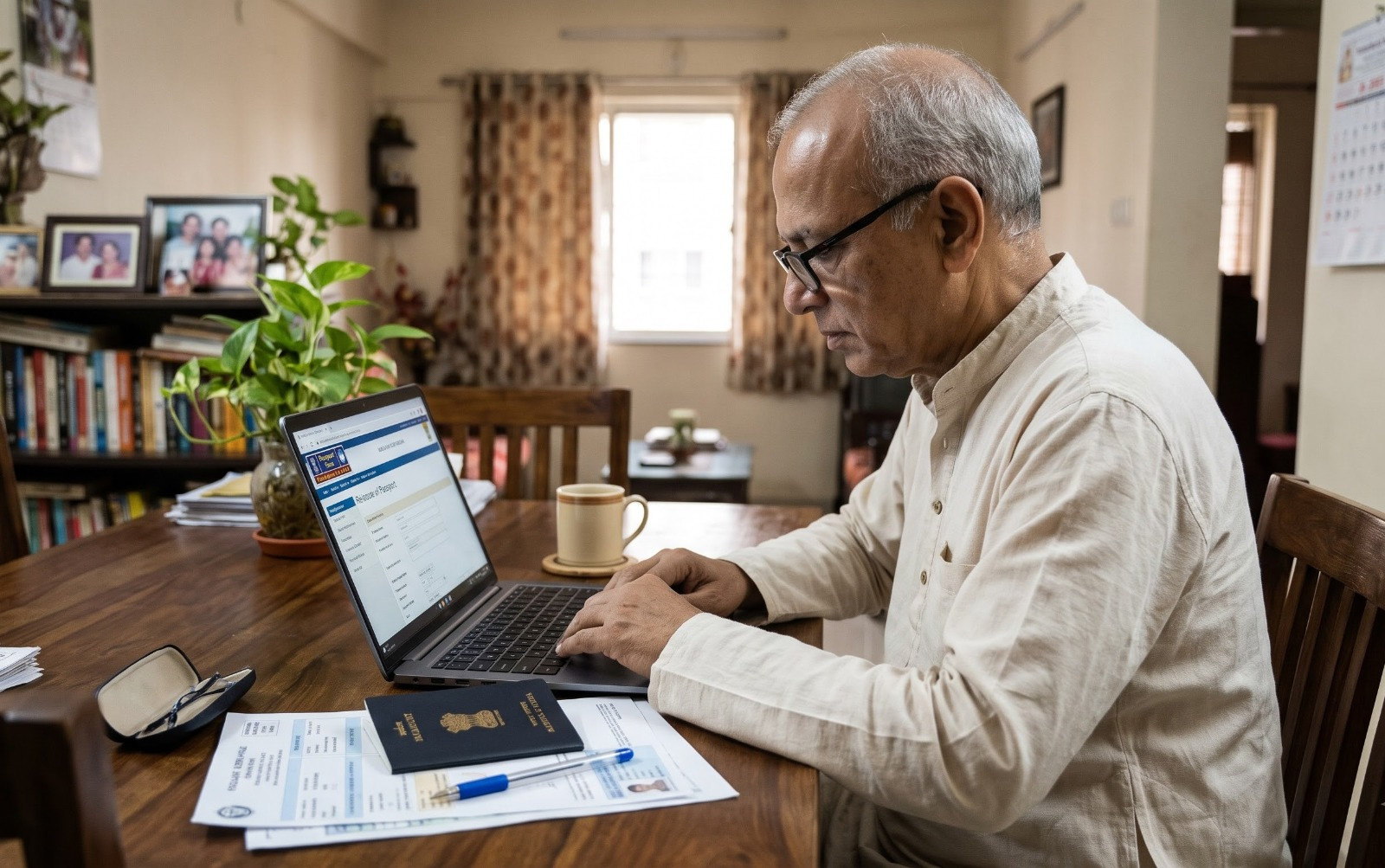
Senior Citizen Train Ticket Booking: Lower Berth Quota and Booking Tips
Published on:
Your father says he’s fine with the overnight train. Your mother says the upper berth is “no problem.” Then you picture a 72-year-old climbing a metal ladder at 2 a.m., and you open IRCTC with a knot in your stomach.
Good senior citizen train ticket booking isn’t about clever tricks. It’s about a handful of settings, a sensible train, and knowing what happens if the ticket doesn’t confirm. This guide walks through all of it. For the wider picture on trips with parents (health checks, medicines, hotels), see our broader guide on travelling with parents. Here we stay on the railway ticket.
Quick answer
- Indian Railways allots lower berths to senior citizens and women aged 45 and above automatically, subject to availability, even if they don’t pick one. It’s a small quota, so it isn’t guaranteed.
- On IRCTC, tick the lower berth preference for each eligible passenger, and read the “confirmed berths only” and auto-upgrade options before paying.
- The senior citizen fare concession was withdrawn on 20 March 2020. As of the latest reports we found (March 2026), it hadn’t been restored. Check IRCTC before assuming any discount.
- Age is not a Tatkal exemption in anything we found. Book early.
Who counts as a “senior citizen” for the quota?
The age rules have changed over the years, and different sources quote them differently. What we could confirm is that the Railway Minister has stated in Parliament that lower berths go automatically to senior citizens and to female passengers aged 45 and above. The 45+ cut-off for women is clear. For men, the age commonly applied is 60 and above, but we couldn’t confirm that figure from an official railway page for this article.
So treat it this way:
- Women 45+ and senior citizens are in the lower-berth group. Enter the exact date of birth/age on the passenger list.
- Check the current age criteria in the IRCTC booking form, which usually shows the concession and quota categories as you add passengers.
- If your parent is close to the cut-off, don’t count on the quota. Choose a lower berth the normal way, by booking early.
How the lower berth quota works
Here’s the part that surprises people: it’s not a promise of a lower berth. It’s a small share of berths per coach set aside and given first to eligible passengers when the system allots berths.
According to the Minister’s statement as reported in the press, the combined allocation for senior citizens, women 45+ and pregnant women works out roughly as follows. The exact number depends on how many coaches of that class the train runs.
| Class | Lower berths set aside (combined group) |
|---|---|
| Sleeper (SL) | About 6 to 7 per coach |
| 3AC | About 4 to 5 per coach |
| 2AC | About 3 to 4 per coach |
A few practical points follow from this:
- It’s per coach and shared. If five elderly passengers book the same day, the lower berths can run out.
- It applies to reserved sleeping classes. You won’t have a “lower berth” in a chair car or Vande Bharat. Those have seats.
- Vacant lower berths are offered onward. Reports say that if a lower berth falls vacant during the journey, it goes first to a senior citizen, person with a disability or pregnant woman who’s been given a middle or upper berth. It’s worth politely asking the ticket examiner (TTE) once the train departs.
- Booking together. If your parents travel as a couple and only one is eligible, the system may give one lower berth and one different berth. Keep this in mind when planning.
Setting the lower berth preference on IRCTC
On the IRCTC website or app, the passenger form has a berth preference drop-down for each person. The steps are simple:
- Add each passenger with correct name, age and gender.
- Under “Berth Preference,” choose Lower for your parent.
- Before paying, read the checkboxes near the bottom. IRCTC has offered options such as “Consider for auto upgradation” and “Book only if confirmed berths are allotted.”
- Review the passenger list one last time, then pay.
What do those options mean in plain words?
| Option | What it does | When to use it |
|---|---|---|
| Berth preference: Lower | Asks for a lower berth; allotted subject to availability | Always, for a senior |
| Auto upgrade | May move a confirmed passenger to a higher class if seats are free | Fine for most; skip if a parent wants a specific coach |
| Book only if confirmed berths are allotted | Stops the booking if you’d get anything other than a confirmed berth | Useful if you don’t want a waitlist or a split family |
We couldn’t open IRCTC’s own help pages to re-confirm the exact wording and positions of these options in November 2026. The screens change. Look closely at the final page before you pay.
If your parent isn’t comfortable with phone apps, our Technology Troubleshooting support can help with the IRCTC app setup, and a family member can do the booking.
What about the senior citizen fare concession?
Plainly: as far as we could confirm, there is no senior citizen fare concession on Indian Railways right now.
- The concession (a discount on the base fare) was withdrawn on 20 March 2020 when Covid restrictions began.
- In March 2026, MPs raised the matter in the Lok Sabha and asked for it to be restored. The reports we found don’t mention any announcement that it was brought back.
- Several news pieces around the Budget in early 2026 discussed the possibility. We found no confirmation that it happened.
If you see an agent or website advertising a “senior citizen discount” on a train ticket, check it on IRCTC itself first. If the concession has been restored by the time you read this, the IRCTC booking page will say so, and you’ll usually need a valid ID proving age.
Tatkal and Premium Tatkal for last-minute trips
Sometimes a parent’s travel plan changes with three days’ notice: a hospital visit, a family function. Tatkal exists for that.
- Tatkal opens one day before the journey date (separate morning times for AC and non-AC classes; check the exact times on IRCTC). It costs more than a regular ticket.
- Premium Tatkal is dynamically priced on selected trains. It can be much higher than Tatkal.
- Age is not an exemption. We found no rule giving seniors a special Tatkal window or a waiver of the extra charge.
- Aadhaar authentication. Reports say IRCTC has required Aadhaar-verified accounts for online Tatkal booking since July 2025, and there have been further reports of Aadhaar rules for early-day booking in 2026. Get the account verified before the day you need it, not during.
- Refund rules on confirmed Tatkal tickets are stricter. Read them before you pay.
If it’s urgent and you’re unsure of the process, a CareManager can handle the booking while you focus on the rest of the plan.
Choosing the right class for your parent
The best class is the one your parent can sit, sleep and use the toilet in without a struggle. Fares vary widely, so we haven’t listed any here.
| Class | Good for | Watch out for |
|---|---|---|
| Sleeper (SL) | Budget travel | Crowded, open to unreserved overflow, hard on frail parents on long routes |
| 3AC | Overnight journeys, a good balance | Narrow berths, side berths are tight |
| 2AC | Overnight with more privacy and curtains | Costs more; upper berth ladders |
| 1AC | Most space on supported trains | Costs the most; fewer trains |
| Chair Car (CC) | Day trips, short journeys | Seat only; no lying down |
| Vande Bharat | Day trips, fast, modern coaches | Seats only; reports say wheelchair spaces in first/last coaches |
| Shatabdi | Day trips between city pairs | Fixed timings; seats only |
| Rajdhani | Long overnight routes, fewer stops | Limited departure times |
If your mother has knee trouble, a lower berth in 3AC is often more comfortable than an upper berth in 2AC. If the trip is under six or seven hours in daytime, a chair car on a faster train is often kinder than a night train. For help with strength and balance before a trip, see our fall prevention exercises.
Picking the train: fewer changes, kinder timings
A direct train beats a faster route that needs a change. Every change means a new platform, new luggage handling and another risk of a missed connection.
- Prefer direct trains. If you must change, leave at least two to three hours between trains.
- Avoid 2 a.m. arrivals. Night arrivals mean cold platforms, no cab and an anxious relative waiting outside.
- Daytime departures are easier for the first train journey after a long gap.
- Choose the boarding station carefully. A smaller station with an easy approach can beat a huge junction.
- Check for coaches near the exit. Note the coach position on the platform and tell your parent.
Boarding at big stations
A large station can be tiring even before the train arrives.
- Platform changes happen. Check the platform again at the station and on the NTES app or station display boards.
- Foot-over-bridges are hard. Lifts and escalators are available at many major stations, but not all. Look at the station’s facilities before choosing it.
- Ask for help early. Porters are available at major stations. Reports say wheelchair assistance is available at stations, usually on request. Confirm how to arrange it for your station through IRCTC, the station enquiry office or the Railways helpline 139, and book it a day ahead where possible.
- Be at the station early, but not two hours early, with nowhere to sit.
- Rail Madad can be used for complaints and help during the journey.
Verify the wheelchair and porter rules for your specific station before you travel. They aren’t identical everywhere.
Waitlist (WL) and RAC, explained simply
- Confirmed (CNF): a berth with a number. Nothing more to do.
- RAC (Reservation Against Cancellation): your parent has a seat on a side lower berth, shared with another RAC passenger. It’s allowed to board, and it often turns into a full berth when others cancel. It’s uncomfortable for long overnight trips.
- Waitlist (WL): no berth yet. If it doesn’t confirm by the time the final chart is prepared, an e-ticket is generally cancelled automatically and refunded, and your parent cannot board on it.
The chart is typically finalised a few hours before departure. For a frail parent, a waitlisted ticket is a gamble you don’t need. If the WL number is high, book another train or class instead.
Here’s a scenario: your father’s ticket shows WL 6 on Monday morning for a Friday train. By Wednesday it’s WL 2. Thursday night it’s still WL 2. Now you have 12 hours to find a plan B. Look for alternatives early, and don’t cancel the first ticket until the second one is confirmed.
Cancellation and refund basics
Refund amounts depend on the class and how close to departure you cancel. We haven’t quoted any numbers, because the deduction slabs change. Do check:
- Cancel on IRCTC as early as you can.
- A confirmed ticket cancelled very close to departure gets a smaller refund.
- Tatkal refunds are limited.
- Partial cancellation of a multi-passenger ticket is possible in some cases. Read the screen carefully.
- Never leave a waitlisted ticket unused hoping it will “work out.” Check how WL tickets bought at a counter are handled; those may need to be cancelled by the passenger.
IDs and what your parent needs on the day
Railway checking staff can ask for proof of identity. Carry:
- One original photo ID from the list IRCTC accepts (Aadhaar, passport, driving licence, voter card, etc.). The ID for the passenger named on the ticket, not a photocopy. Check IRCTC’s list for what’s accepted now, including digital copies.
- The ticket, either the e-ticket SMS/PDF or a printed copy.
- Medicines in a small bag, plus a list of doses and your doctor’s number.
- Water, light snacks and a shawl, since AC coaches can be cold.
- Phone with a full charge, a power bank and a note with your number in large print.
- Spectacles, a walking stick, and any support your parent uses.
Common mistakes (and how to avoid them)
| Mistake | What goes wrong | Fix |
|---|---|---|
| Name on ticket doesn’t match ID | Trouble with the TTE on board | Type the name exactly as on the ID |
| Wrong boarding station | Passenger waits at a different station | Check station code and its name, such as New Delhi vs Delhi Junction |
| Leaving WL ticket in the hope it’ll confirm | Missed trip, last-minute scramble | Have a backup option |
| Choosing the “cheapest” middle/upper berth | Parent can’t climb | Always set the lower preference and tell the TTE |
| Booking a tight change | Missed connection | Leave at least two to three hours |
| Ignoring the passenger’s age field | Quota not applied | Enter the correct age and gender |
| Not telling parents the platform and coach | Confusion on arrival | Send a screenshot to their phone |
Booking-day checklist
- ☐ Confirm each passenger’s name, age and gender against ID.
- ☐ Pick a direct train with a sensible timing.
- ☐ Set the lower berth preference; review the auto-upgrade and confirmed-berth options.
- ☐ Check the boarding and destination station codes.
- ☐ Verify your IRCTC account, including Aadhaar if you may need Tatkal.
- ☐ Save the e-ticket on both your phone and your parent’s.
- ☐ Arrange porter or wheelchair help at the station.
- ☐ Plan the ride from home to the station and the pickup at the end.
- ☐ Note the coach position and send a platform screenshot on the day.
- ☐ Re-check the ticket status the evening before, and again on the morning of travel.
Where a Senocare CareManager can help
Not every family wants to do this alone, especially NRIs booking from abroad or people in another city. Senocare’s travel and tours service is run by CareManagers and covers train, air and hotel bookings, plus escorted tours. A CareManager can do the booking and, where you’ve arranged it, travel with your parent. See our travel and tours page for what’s offered.
If the trip is part of a longer care plan, our care packages may fit, and our post on caring for elderly parents at home covers the days before and after the journey.
Frequently asked questions
No. Lower berths are set aside in a small number per coach for senior citizens, women aged 45 and above, and pregnant women, and they’re allotted subject to availability. Book early and set the lower preference. If one doesn’t come through, ask the TTE about any lower berth that falls vacant.
Not as far as we could confirm. The concession was withdrawn on 20 March 2020, and reports from March 2026 indicate it hadn’t been restored. Policy can change, so check the IRCTC booking page before you book, and be careful with anyone offering a “senior discount.”
We found no special Tatkal window or exemption for senior citizens. Tatkal costs extra, and online booking may need an Aadhaar-verified IRCTC account. If your parent’s trip is likely, book a regular ticket as early as possible instead of relying on Tatkal.
Check the status each day. If the waitlist number isn’t moving close to departure, book a backup on another train or class. Don’t board a train on a waitlisted e-ticket that hasn’t confirmed. It isn’t valid for travel once the chart is final.
Railway stations generally offer porters, and wheelchair help is available at many stations on request. The process differs by station, so confirm through IRCTC, the station enquiry office or helpline 139 before the day, and arrange it a day ahead where you can.
Carry an original photo ID from IRCTC’s accepted list, such as Aadhaar or a passport, matching the name on the ticket. Keep the e-ticket handy as well. Check the IRCTC site for what’s currently accepted, including digital IDs.
Plan the next trip with a CareManager
If you’d rather not juggle quotas, charts and platform numbers from another city, talk to us. Senocare’s travel and tours team can help you plan and book a train journey, and a CareManager can accompany your parent where arranged. Contact Senocare to discuss the trip.